

Evaporating Dishes
What Are Evaporating Dishes
Evaporating dishes are a type of laboratory equipment used to evaporate a liquid from a sample. They are typically made of porcelain or glass and have a flat, circular bottom that allows for efficient heat transfer. Evaporating dishes are commonly used in chemistry and biology laboratories to concentrate samples or dry out a solution. They can be heated on a hot plate, Bunsen burner, or other laboratory heat sources. Once the liquid has evaporated, the remaining solid can be analyzed or further processed. Evaporating dishes are an essential tool for many laboratory procedures.
Advantages of Evaporating Dishes
Rapid evaporation
Evaporating dishes are designed to promote rapid evaporation of liquids. This is achieved through the large surface area of the dish and the open mouth, which allows for efficient heat transfer and airflow. This rapid evaporation allows scientists to concentrate liquids quickly, saving time and effort in their experiments.
Easy monitoring
The transparent nature of glass allows scientists to easily observe the progress of evaporation. This allows them to monitor the concentration process and ensure that it is complete before further processing or analysis.
Controlled evaporation
By using evaporating dishes, scientists can control the rate of evaporation by adjusting the temperature and airflow. This control allows for more precise experiments, as the evaporation process can be standardized and repeated consistently.
Minimal heat damage
The open design of evaporating dishes allows for efficient heat dissipation, reducing the risk of heat damage to the liquid or nearby equipment. This helps to ensure that the quality of the final product is not compromised.
Easy cleaning
Similar to glass beakers, evaporating dishes can be easily cleaned and sterilized. This ensures that they are free from residual contaminants, providing a clean and sterile surface for evaporating liquids.
Precise measurement
The flat bottom of evaporating dishes allows for precise measurement of liquid volume, ensuring that accurate results are obtained in experiments.
-
![1171 Lab Boro 3.3 Glass Flat Bottom Evaporating Dish with Spout]() 1171 Lab Boro 3.3 Glass Flat Bottom Evaporating Dish with...Laboratory evaporating dishes are made of high quality borosilicate glass. Designed for efficient evaporation of liquids, evaporating dishes with spout have excellent heat and chemical resistance....read more
1171 Lab Boro 3.3 Glass Flat Bottom Evaporating Dish with...Laboratory evaporating dishes are made of high quality borosilicate glass. Designed for efficient evaporation of liquids, evaporating dishes with spout have excellent heat and chemical resistance....read more -
![1172 Lab Borosilicate Glass Evaporating Dish Round Bottom Dish with Spout]() 1172 Lab Borosilicate Glass Evaporating Dish Round Bottom...Evaporating Dish Round Bottom is made of high- quality glass for use.Lab Glass Evaporating Dish not can be used for laboratory and school, but also for home.With spout, heat- resistant and premium...read more
1172 Lab Borosilicate Glass Evaporating Dish Round Bottom...Evaporating Dish Round Bottom is made of high- quality glass for use.Lab Glass Evaporating Dish not can be used for laboratory and school, but also for home.With spout, heat- resistant and premium...read more -
![1173 Glassware 90mm 100mm Flat Bottom Glass Crystallizing Dish with Spout]() 1173 Glassware 90mm 100mm Flat Bottom Glass Crystallizing...Glass Crystallizing Dish is made from high-quality borosilicate glass. It provides a controlled environment for the formation of crystals from a solution. Crystallizing Dish With Spout is used in...read more
1173 Glassware 90mm 100mm Flat Bottom Glass Crystallizing...Glass Crystallizing Dish is made from high-quality borosilicate glass. It provides a controlled environment for the formation of crystals from a solution. Crystallizing Dish With Spout is used in...read more -
![Glazed Ceramic Porcelain Evaporating Dishes With Spout]() Glazed Ceramic Porcelain Evaporating Dishes With SpoutPorcelain evaporating dish is made of high quality porcelain and used for the evaporation of liquids.The glazed porcelain evaporating dish is glazed on the inside and partly glazed on the outside,...read more
Glazed Ceramic Porcelain Evaporating Dishes With SpoutPorcelain evaporating dish is made of high quality porcelain and used for the evaporation of liquids.The glazed porcelain evaporating dish is glazed on the inside and partly glazed on the outside,...read more -
![60ml 100ml 125ml 200ml Porcelain Evaporating Dish Used in Chemistry Lab]() 60ml 100ml 125ml 200ml Porcelain Evaporating Dish Used in...Evaporating dish used in chemistry lab are used for evaporating concentrated solutions or burning solids.evaporating dish used in chemistry lab are placed on a heating source, such as a Bunsen...read more
60ml 100ml 125ml 200ml Porcelain Evaporating Dish Used in...Evaporating dish used in chemistry lab are used for evaporating concentrated solutions or burning solids.evaporating dish used in chemistry lab are placed on a heating source, such as a Bunsen...read more


Why Choose Us
Advanced equipment
A machine, tool or instrument designed with advanced technology and functionality to perform highly specific tasks with greater precision, efficiency and reliability.
High quality
Our products are manufactured or executed to a very high standard, using the finest materials and manufacturing processes.
Professional team
Our professional team collaborates and communicates effectively with each other, and is dedicated to delivering high quality results. We are capable of handling complex challenges and projects that require our specialized expertise and experience.
Quality control
We have built a professional quality control team to accurately inspect every raw material and every production process.
Customized services
We understand that each customer has unique manufacturing needs. That’s why we offer customization options to cater to your specific requirements.
24H online service
We try and respond to all concerns within 24 hours and our teams are always at your disposal in case of any emergencies.
Types of Evaporating Dishes
Porcelain evaporating dishes
Ceramic evaporating dishes are a popular choice due to their durability and resistance to thermal shock. They are usually white or light-colored with a smooth, shiny surface. Ceramic evaporating dishes are ideal for samples that require high temperatures or are susceptible to thermal shock. They are also resistant to chemicals and high temperatures, making them ideal for use with hot plates, Bunsen burners, or other laboratory heat sources.
Glass evaporating dish
Glass evaporating dishes are another popular choice due to their transparency and versatility. Glass evaporating dishes are usually made from borosilicate glass, a glass that is resistant to thermal shock and has a low coefficient of expansion. This means it can withstand rapid changes in temperature without cracking or breaking. Glass evaporating dishes are usually transparent or light-colored, with a smooth and shiny surface. They are ideal for samples that require precise temperature control or need to be monitored during the evaporation process.
Observe glass evaporating dish
Watch glass evaporating dishes are small, round dishes with a flat bottom and sloping sides. Made of glass or metal, they are ideal for small samples or precision experiments. Watch glass evaporating dishes are often used to dry samples or concentrate solutions in organic chemistry experiments.
Rotary evaporator
The rotary evaporator dish is a special evaporation dish used with the rotary evaporator. A rotary evaporator is a laboratory device used to evaporate liquids from samples by reducing pressure and heating. Rotary evaporators are usually made of glass or metal and have a rounded bottom and a nozzle for drainage. They are designed to be mounted on a rotary evaporator and rotate during the evaporation process, which helps distribute heat evenly and improve evaporation efficiency.
Vacuum evaporating dish
The vacuum evaporating dish is a special evaporating dish used in conjunction with the vacuum evaporator. A vacuum evaporator is a laboratory device used to evaporate liquids from samples by reducing pressure and creating a vacuum. Vacuum evaporating dishes are usually made of glass or metal and have a rounded bottom and a nozzle for drainage. They are designed for mounting on vacuum evaporators for use with sensitive samples requiring precise temperature control and low oxygen exposure, such as in organic synthesis.
How to Store Evaporating Dishes
Choose a dry and clean location
Evaporating dishes should be stored in a dry and clean location to prevent moisture buildup and contamination. A storage cabinet or shelf in the laboratory is an ideal place to store evaporating dishes.
Organize by type and size
It is important to organize evaporating dishes by type and size to make them easy to find and use. Labeling the storage area with the type and size of the evaporating dishes can help in this process.
Protect from damage
Evaporating dishes can be fragile, especially glass ones. It is important to protect them from damage during storage. Placing each evaporating dish in a protective sleeve or wrapping it in paper can prevent scratches and breakage.
Avoid overcrowding
Overcrowding can cause damage to evaporating dishes, especially glass ones. It is important to leave some space between each evaporating dish to prevent breakage.
Regular inspection
Regular inspection of evaporating dishes is important to ensure that they are in good condition and free from damage or contamination. Any damaged or unusable evaporating dishes should be disposed of properly.
Separate clean and dirty dishes
To prevent cross-contamination, it is important to separate clean and dirty evaporating dishes during storage. A separate storage area for clean dishes can help maintain their cleanliness and prevent contamination.
Avoid extreme temperatures
Extreme temperatures can cause damage to evaporating dishes, especially glass ones. It is important to avoid storing them in areas with extreme temperatures, such as near heating or cooling sources.
Handle with care
When handling evaporating dishes, it is important to use both hands and support the base and edges to prevent breakage. Avoid dropping or banging them against other objects.
Application of Evaporating Dishes
Chemistry
Evaporating dishes are widely used in chemistry experiments to dry samples or concentrate solutions. They are used in experiments involving organic compounds, inorganic compounds, and biochemistry. For example, in organic synthesis, evaporating dishes are used to remove solvents from organic compounds to obtain the desired product.
Biology
In biology, evaporating dishes are used to culture cells, bacteria, and other microorganisms. They are also used to dry biological samples, such as plant leaves and insects, for subsequent analysis.
Food science
Evaporating dishes are used in food science to remove moisture from food samples, such as fruits and vegetables, to study their properties and nutritional content. They are also used in the development of new food products, such as dehydrated foods.
Material science
In material science, evaporating dishes are used to remove solvents from materials, such as polymers and ceramics, to obtain the desired properties. They are also used to dry solid materials, such as metals and alloys, for subsequent analysis.
Environmental science
In environmental science, evaporating dishes are used to study the properties of water and soil samples. They are used to remove water from soil samples to study its properties, such as texture and pH. They are also used to evaporate water from water samples to study its chemical properties, such as dissolved oxygen and nutrients.
Pharmaceutical science
In pharmaceutical science, evaporating dishes are used to remove solvents from drugs and pharmaceuticals to obtain the desired properties. They are also used to dry solid pharmaceuticals, such as tablets and capsules, for subsequent analysis.
Precautions When Using Evaporating Dishes
Handling with care
Evaporating dishes, especially those made of glass, can be fragile and susceptible to breaking if not handled with care. Always use both hands when handling evaporating dishes, and avoid banging or dropping them against hard surfaces.
Use appropriate materials
Different samples require different types of evaporating dishes. For instance, some samples might require glass evaporating dishes, while others might require ceramic or metal dishes. Always use the appropriate material for the sample you are working with.
Store properly
When not in use, evaporating dishes should be stored in a clean, dry place to prevent damage and contamination. Make sure to store them separately from other laboratory equipment to avoid any potential damage.
Avoid overloading
Never overload your evaporating dish with more sample than it can handle. Overloading can lead to spills, mess, and potential damage to the dish. Always use the appropriate size dish for your sample.
Use proper ventilation
When using evaporating dishes, especially those containing volatile or hazardous chemicals, ensure that the area is well-ventilated. This can help prevent inhalation of harmful fumes and reduce the risk of fire.
Wear protective gear
When working with evaporating dishes, especially those containing hazardous chemicals, it's crucial to wear appropriate protective gear, such as gloves, goggles, and a lab coat.
Regular inspection
Regularly inspect your evaporating dishes for any signs of damage or wear. Discard any dishes that show signs of damage to prevent accidents or errors in experimental results.
Clean properly
Always clean your evaporating dishes thoroughly after each use. This can help prevent contamination of future samples and extend the life of your dishes.
Use correct technique
When using evaporating dishes, ensure you are using the correct technique. For instance, do not heat the dish until it is completely dry as this could cause damage. Always follow the proper protocol for the sample you are working with.
Store separately
Store clean and dirty dishes separately to prevent contamination.
Preparation
The first step in the process is to prepare the sample. Depending on the sample, it may need to be weighed, measured, or otherwise prepared before placing it in the evaporating dish. It's crucial to use the appropriate size dish for your sample to prevent spills or mess.
Addition of solvent
If necessary, a solvent may be added to the sample. This can help to speed up the evaporation process and ensure complete removal of the liquid.
Placement in oven
Once the sample has been prepared, it is placed in an oven or on a hot plate to begin the evaporation process. The temperature and time will depend on the sample and the desired result.
Monitoring
During the evaporation process, it's crucial to monitor the sample regularly. This can help prevent over-evaporation or other issues that could affect the accuracy of the results.
Collection of data
As the sample evaporates, data can be collected on the amount of liquid remaining, the time it takes to evaporate, and other relevant information. This data can be used to analyze the sample and draw conclusions.
Cleaning
Once the evaporation process is complete, the evaporating dish should be cleaned thoroughly to prevent contamination of future samples. This can also help extend the life of the dish.
Storage
Clean and dry evaporating dishes should be stored in a clean, dry place to prevent damage and contamination. Make sure to store them separately from other laboratory equipment to avoid any potential damage.

How to Install Evaporating Dishes
Choose the right location
The first step in installing evaporating dishes is to choose the right location. The location should be well-ventilated, have access to an electrical outlet for the hot plate or oven, and be near a sink for cleaning.
Prepare the equipment
Before installing the evaporating dishes, make sure to prepare the equipment. This includes checking that the hot plate or oven is working properly, and that the evaporating dishes are clean and free from any debris or contamination.
Place the dishes
Once the equipment is ready, place the evaporating dishes on the hot plate or in the oven. Make sure to use the appropriate size dish for your sample to prevent spills or mess.
Secure the dishes
To prevent the dishes from moving or tipping over during the evaporation process, it's crucial to secure them in place. This can be done by using a clamp or stand to hold the dishes in place.
Adjust the temperature
Depending on the sample and the desired result, the temperature of the hot plate or oven will need to be adjusted. Make sure to set the temperature to the appropriate level to ensure complete evaporation of the liquid while preventing damage to the sample or the dish.
Monitor the process
During the evaporation process, it's crucial to monitor the sample regularly. This can help prevent over-evaporation or other issues that could affect the accuracy of the results.
Clean and store
Once the evaporation process is complete, the evaporating dishes should be cleaned thoroughly to prevent contamination of future samples. They should then be stored in a clean, dry place to prevent damage and contamination until they are needed again.
Material
Evaporating dishes can be made from a variety of materials, including glass, ceramic, and metal. Glass and ceramic dishes are non-reactive and suitable for most samples, while metal dishes are more durable and resistant to high temperatures. Choose the material based on the sample you are working with and the conditions under which you will be using the dishes.
Size
The size of the evaporating dishes will depend on the size of your sample and the amount of liquid you need to evaporate. Make sure to choose a size that is appropriate for your sample to prevent spills or mess.
Shape
The shape of the evaporating dishes can also affect the evaporation process. Shallow dishes are ideal for samples that need to evaporate quickly, while deeper dishes are better suited for samples that require longer evaporation times.
Cost
The cost of evaporating dishes can vary depending on the material, size, and shape. Consider your budget when choosing the right evaporating dishes for your experiment.
Purpose
Consider the purpose of your experiment and the type of sample you are working with. Some samples may require specialized evaporating dishes, such as those with a specific coating or treatment.
What Are Evaporating Dishes Made Of?
An evaporating dish is a laboratory device used to evaporate liquids from samples. They are usually made of porcelain or glass and have a flat, rounded base that allows for efficient heat transfer. Ceramic evaporating dishes are a popular choice due to their durability and resistance to thermal shock. Porcelain is a ceramic material made by heating raw materials such as kaolin, dwarf spar, and quartz to high temperatures. The firing process fuses the raw materials together to form a hard, non-porous material ideal for laboratory use. Porcelain evaporating dishes are usually white or light-colored, with a smooth and shiny surface. They are also resistant to chemicals and high temperatures, making them ideal for use with hot plates, Bunsen burners, or other laboratory heat sources. Glass evaporating dishes are another popular choice due to their transparency and versatility. Glass evaporating dishes are usually made from borosilicate glass, a glass that is resistant to thermal shock and has a low coefficient of expansion. This means it can withstand rapid changes in temperature without cracking or breaking. Borosilicate glass is made from silica sand, boron oxide and other materials mixed at high temperatures. The resulting material is strong, durable and has a high melting point, making it ideal for use in laboratory equipment. Glass evaporating dishes are usually transparent or light-colored, with a smooth and shiny surface. When selecting an evaporating dish, it is important to consider the sample being evaporated and the laboratory conditions. Ceramic evaporating dishes are ideal for samples that require high temperatures or are susceptible to thermal shock. Glass evaporating dishes are better suited for samples that require precise temperature control or need to be monitored during the evaporation process.
Evaporating dishes are an essential tool in many scientific laboratories, used for the evaporation of liquids from solid materials. The size of evaporating dishes can vary depending on the sample and the desired result. Small evaporating dishes are ideal for small samples or experiments that require precise control over the evaporation process. They are typically made of glass or ceramic and have a diameter of 50-100 mm. Medium evaporating dishes are suitable for larger samples or experiments that require faster evaporation times. They are also typically made of glass or ceramic and have a diameter of 100-150 mm. Large evaporating dishes are ideal for experiments that require large sample sizes or extended evaporation times. They are typically made of ceramic or metal and have a diameter of 150-200 mm. Extra-large evaporating dishes are suitable for experiments that require very large sample sizes or extended evaporation times. They are typically made of ceramic or metal and have a diameter of 200 mm or more. When choosing the size of evaporating dishes for your experiment, it's crucial to consider the size of your sample and the amount of liquid you need to evaporate. Choosing the appropriate size dish can help prevent spills or mess and ensure accurate and reproducible results. It's also important to note that the shape of the evaporating dishes can affect the evaporation process. Shallow dishes are ideal for samples that need to evaporate quickly, while deeper dishes are better suited for samples that require longer evaporation times.
How Should Evaporating Dishes Be Cleaned?
Rinse with water
The first step in cleaning evaporating dishes is to rinse them with tap water to remove any residual sample or debris. Make sure to rinse the dishes thoroughly, especially the bottom and sides, to remove any remaining liquid or residue.
Soak in hot water
After rinsing, soak the evaporating dishes in hot water for at least 10-15 minutes. This helps to soften any residue or debris that may be stuck to the dishes.
Scrub with soap
Once the dishes have been soaked, scrub them with a non-abrasive soap or cleaning solution. This helps to remove any remaining residue or debris from the surface of the dishes.
Rinse with clean water
After scrubbing, rinse the evaporating dishes with clean tap water to remove any soap residue. Make sure to rinse the dishes thoroughly to remove any remaining soap or cleaning solution.
Dry completely
It's crucial to dry the evaporating dishes completely before storing them to prevent moisture buildup and potential contamination. You can dry the dishes by air-drying them, using a clean lint-free cloth, or using a commercial drying rack.
Store properly
Once the evaporating dishes are dry, store them in a clean, dry place to prevent damage and contamination until they are needed again.
Evaporating dishes are commonly used in scientific laboratories for the evaporation of liquids from solid materials. However, when working with corrosive chemicals, it's crucial to choose the appropriate materials and follow proper protocols to ensure safety and accurate experimental results. Corrosive chemicals can cause damage to the material of evaporating dishes, leading to potential safety hazards and inaccurate experimental results. It's crucial to choose evaporating dishes made of materials that are resistant to corrosive chemicals, such as glass or ceramic. These materials are non-reactive and can withstand the corrosive nature of many chemicals. Before using evaporating dishes with corrosive chemicals, it's essential to check the compatibility of the chemicals with the material of the dishes. Some chemicals may react with the material of the dishes, leading to potential safety hazards and inaccurate experimental results. Always consult Material Safety Data Sheets (MSDS) and follow proper protocols when working with corrosive chemicals. Proper cleaning and maintenance of evaporating dishes are crucial when working with corrosive chemicals. Rinse the dishes with water immediately after use to remove any residual chemicals, and clean them thoroughly with a non-abrasive soap or cleaning solution. Avoid using harsh chemicals or abrasive materials that can cause damage to the material of the dishes. When working with corrosive chemicals, it's crucial to follow proper safety precautions to prevent potential hazards. Always wear appropriate personal protective equipment, such as gloves, goggles, and a lab coat, and work in a well-ventilated area. Avoid skin and eye contact with corrosive chemicals, and follow proper waste disposal procedures.
Can Evaporating Dishes Be Used for Sublimation?
Evaporating dishes are commonly used in scientific laboratories for the evaporation of liquids from solid materials. However, they can also be used for sublimation, a process where a substance transitions directly from a solid to a gas phase without passing through a liquid phase. When using evaporating dishes for sublimation, it's crucial to choose materials that are compatible with the substance being sublimated. Some substances may react with the material of the dishes, leading to potential safety hazards and inaccurate experimental results. Glass or ceramic evaporating dishes are generally safe and non-reactive and can be used for sublimation. The design of evaporating dishes can also affect their suitability for sublimation. Shallow dishes with a large surface area are ideal for sublimation as they provide a larger surface area for the substance to sublimate. Deeper dishes may not be suitable for sublimation as they may trap the sublimated gas and affect the accuracy of the experimental results. Sublimation is a temperature-dependent process, and controlling the temperature is crucial for accurate experimental results. It's essential to monitor the temperature of the evaporating dishes during sublimation to ensure that the temperature remains within the appropriate range for the substance being sublimated. When using evaporating dishes for sublimation, it's crucial to follow proper safety precautions to prevent potential hazards.
Our factory
Hongqing New Way Trading Co., Limited located Chongqing, in the south west of China. Neway is a Modern Enterprise which specialized in developing, manufacturing and marketing of lab glasswares, plastic disposables and medical consumables, which has a complete independent research and industrial line.With perfect organization and advanced management, Neway has one professional work team which engaged in the products development and production control. We have already established relationship for product development cooperation with a number of well known domestic and foreign companies. Our main products include medical consumables, laboratory plastic consumables and glass products. We have more than three hundred products, such as blood collection tube, blood lancets, bandages, female swabs, centrifuge tube, test tube, pipette tip, petri dish, cuvettes, glass slide, glass beakers and others, all the products can do OEM as customer required.


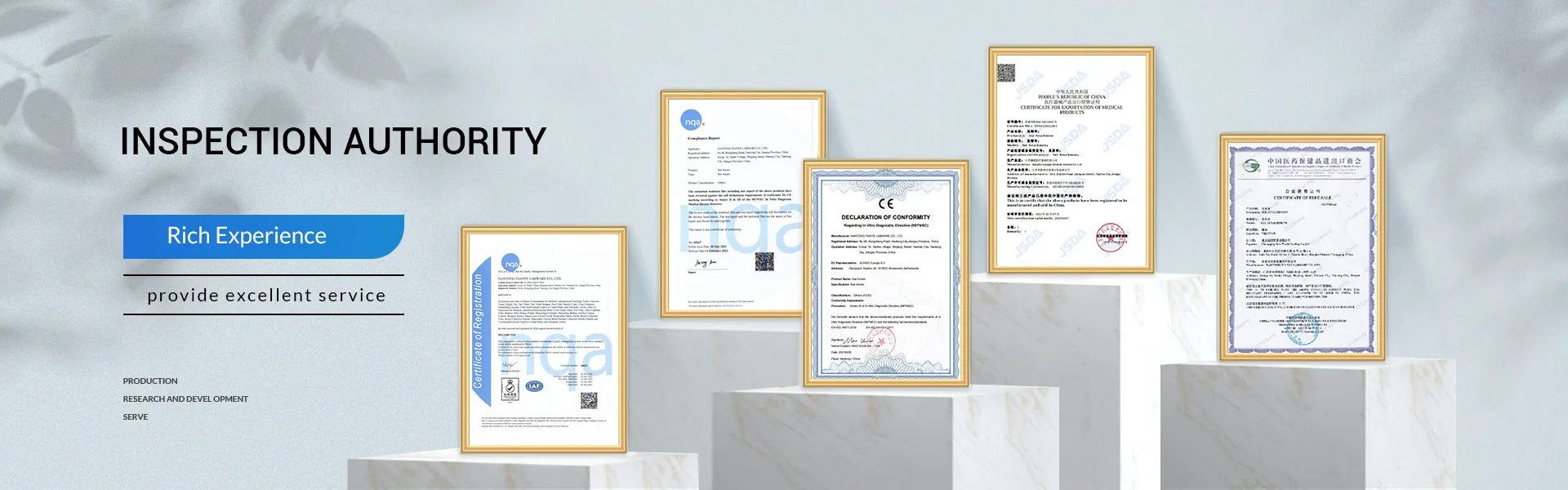
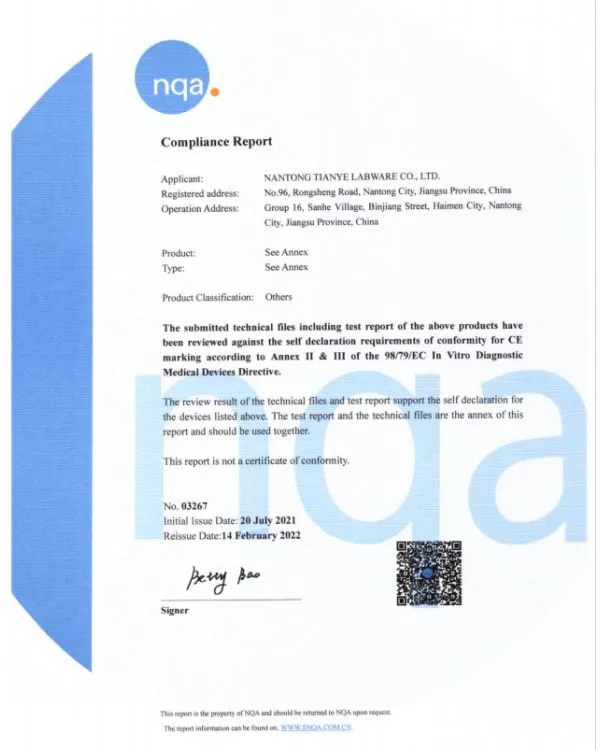
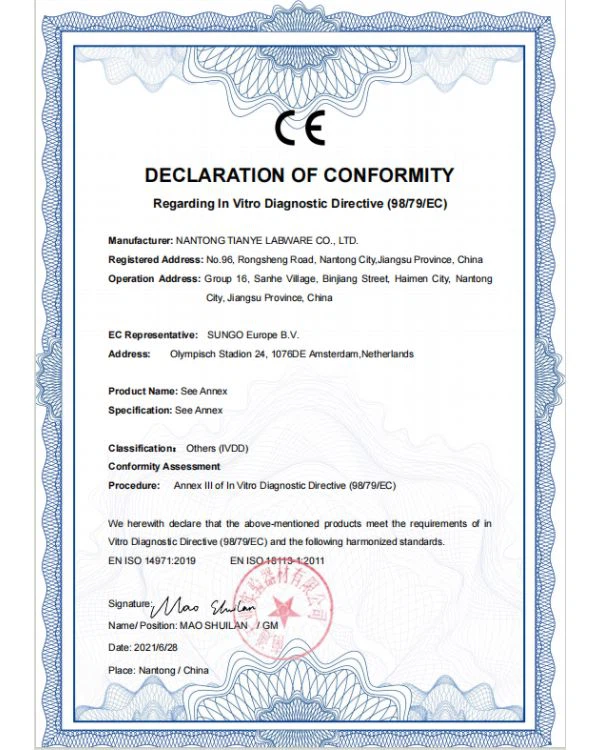
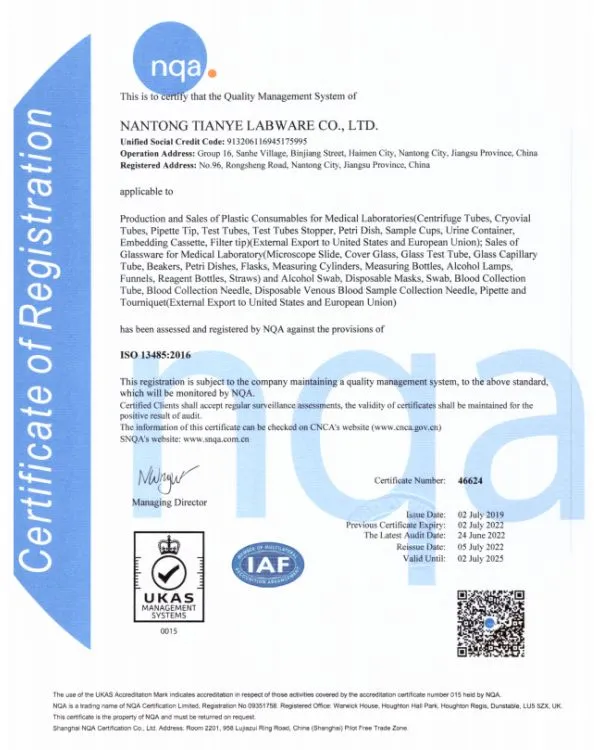
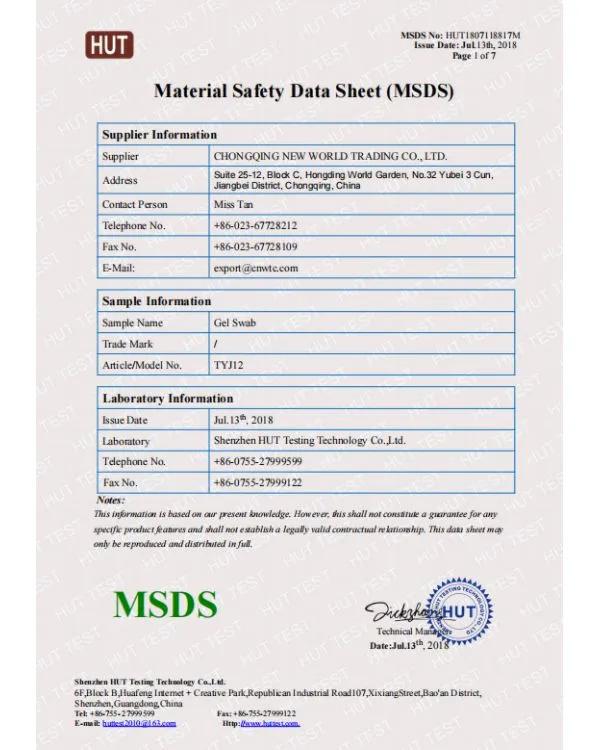
Our Certificate
FAQ
Q: What are evaporating dishes made of?
Q: What are the uses of evaporating dishes?
Q: Can evaporating dishes be used in an oven?
Q: Can evaporating dishes be used in a microwave?
Q: Can evaporating dishes be used for storing chemicals?
Q: How should evaporating dishes be cleaned?
Q: Can evaporating dishes be used with corrosive chemicals?
Q: Can evaporating dishes be used with strong acids or bases?
Q: Can evaporating dishes be used for weighing substances?
Q: Can evaporating dishes be used for titration?
Q: Can evaporating dishes be used for filtration?
Q: Can evaporating dishes be used for melting point determination?
Q: Can evaporating dishes be used for flame tests?
Q: Can evaporating dishes be used for recrystallization?
Q: Can evaporating dishes be used for sublimation?
Q: Can evaporating dishes be used for distillation?
Q: Can evaporating dishes be used for evaporating volatile solvents?
Q: Can evaporating dishes be used for evaporating flammable liquids?
Q: Can evaporating dishes be used for evaporating toxic substances?
Q: Can evaporating dishes be used for evaporating volatile acids?
We're well-known as one of the leading evaporating dishes manufacturers in China. If you're going to buy cheap evaporating dishes in stock, welcome to get quotation and free sample from our factory. Good service and low price are available.
Evaporating Dish Round Bottom, Crystallizing Dish With Spout, 1172 Lab Boro 3 3 Glass Evaporating Dish Round Bottom Dish With Spout