

Reagent Bottle
What Is Reagent Bottle
A reagent bottle is a type of container commonly used in scientific laboratories to store, transport, and dispense chemical reagents. They come in various sizes and shapes, depending on the type of reagent being stored. Reagent bottles typically have a narrow neck with a stopper or cap to prevent contamination and evaporation. Some reagent bottles have built-in dispensers that allow for precise measurement and application of the reagent. Proper storage and handling of reagent bottles are crucial to ensure the integrity of the chemical reagents and to prevent accidents or hazards in the laboratory.
Convenience
Reagent bottles are designed to make dispensing reagents easy and efficient. They usually have a screw-on lid that can be tightly closed, preventing leakage or evaporation. The screw-on lid also allows for accurate dispensing of the reagents, ensuring that the correct amount is used in experiments or reactions.
Storage
Reagent bottles provide a convenient way to store reagents for long periods of time. The screw-on lid ensures that the reagents remain airtight, protecting them from external contaminants. The bottles are also usually made from chemically inert materials that prevent reactions between the bottle and the reagents stored within it.
Labeling
Reagent bottles usually come with a label that can be used to identify the contents. This labeling makes it easy to identify the reagents stored in the bottle without opening it. The label can also include additional information such as the expiration date, lot number, or any special storage requirements for the reagents.
Portability
Reagent bottles are often small and lightweight, making them easy to transport. This portability is essential for researchers who need to move their reagents from one lab to another or for fieldwork where reagents need to be taken to remote locations.
Cost-effective
Reagent bottles are often more cost-effective than individual packaging of each reagent. Buying larger quantities of reagents in reagent bottles can save money and reduce waste.
Customizable
Reagent bottles are available in various sizes, shapes, and materials to suit different applications. Researchers can choose the appropriate bottle based on the volume and type of reagent they need to store or dispense.
-
![250ml 500ml 1000ml Borosilicate Glass Reagent Media Bottle with Blue Screw Cap]() 250ml 500ml 1000ml Borosilicate Glass Reagent Media Bottl...The reagent bottle with blue screw cap plays an important role in the laboratory by effectively protecting the reagents, facilitating storage and access, and alerting the laboratory staff to the...read more
-
![Transparent Glass Narrow Mouth Stoppered Reagent Bottle with Glass Stopper]() Transparent Glass Narrow Mouth Stoppered Reagent Bottle w...The narrow mouth reagent bottle is a clear, narrow-mouth glass container, usually used in laboratories, that is hermetically sealed.read more
-
![Laboratory Amber Glass Narrow Mouth Reagent Bottle with Glass Stopper]() Laboratory Amber Glass Narrow Mouth Reagent Bottle with G...Amber glass narrow mouth reagent bottles are specialized laboratory containers designed for the safe storage and handling of light-sensitive chemicals, reagents, or solutions. Crafted from...read more
-
![Lab Clear Glass Wide Mouth Reagent Bottle with Ground in Glass Stopper]() Lab Clear Glass Wide Mouth Reagent Bottle with Ground in ...Reagent Bottle With Ground in Glass Stopper are used to store chemical reagents, such as capsules, medicines, flavors, detergents and other chemical products. They have the characteristics of good...read more
-
![Laboratory Amber Colour Glass Wide Mouth Reagent Bottle with Glass Stopper]() Laboratory Amber Colour Glass Wide Mouth Reagent Bottle w...Amber glass reagent bottle with glass stopper protects the contents of the bottle from UV rays and is suitable for the storage of light sensitive substances and for long term storage of a wide...read more
-
![Borosilicate Amber Glass Media Bottle with Plastic Blue Screw Cap]() Borosilicate Amber Glass Media Bottle with Plastic Blue S...The media bottle with plastic blue screw cap is a thick glass product with a temperature resistance of up to 121°C and a brown colour that protects it from light. It has a tight sealing mouth and...read more


Why Choose Us
Advanced equipment
A machine, tool or instrument designed with advanced technology and functionality to perform highly specific tasks with greater precision, efficiency and reliability.
High quality
Our products are manufactured or executed to a very high standard, using the finest materials and manufacturing processes.
Professional team
Our professional team collaborates and communicates effectively with each other, and is dedicated to delivering high quality results. We are capable of handling complex challenges and projects that require our specialized expertise and experience.
Quality control
We have built a professional quality control team to accurately inspect every raw material and every production process.
Customized services
We understand that each customer has unique manufacturing needs. That’s why we offer customization options to cater to your specific requirements.
24H online service
We try and respond to all concerns within 24 hours and our teams are always at your disposal in case of any emergencies.
Types of Reagent Bottle
Boston round bottles
Boston round bottles are the most common type of reagent bottle used in laboratories. They have a round body and a rounded bottom that helps to prevent the buildup of pressure and reduce the risk of leaks. They come in various sizes and materials, including glass, plastic, and polypropylene.
Screw-cap bottles
Screw-cap bottles are designed for easy dispensing and sealing. They have a threaded neck that screws onto a cap, creating an airtight seal. They are ideal for storing and dispensing volatile and corrosive chemicals.
Dropper bottles
Dropper bottles are designed for precision dispensing. They have a long, narrow neck with a rubber bulb for dispensing small amounts of liquid. They are ideal for storing and dispensing delicate and concentrated solutions.
Wide-mouth bottles
Wide-mouth bottles have a wide opening that allows easy access for filling and cleaning. They are ideal for storing and dispensing powders, tablets, and other solid materials.
Volumetric flasks
Volumetric flasks are designed for precise measurement and dispensing of liquids. They have a long, narrow neck and a flat bottom that creates a stable base for measurement. They come in various sizes and are made of glass or plastic.
Beaker bottles
Beaker bottles have a beaker-shaped body with a cylindrical neck. They are ideal for storing and dispensing larger volumes of liquids. They come in various sizes and materials, including glass, plastic, and polypropylene.
How to Store Reagent Bottle
Choose the right location
The location where you store your reagent bottles should be dry, clean, and free from dust and debris. Humidity and moisture can cause corrosion and damage to the bottles and their contents. Avoid storing reagent bottles in areas with high temperatures or direct sunlight, as this can accelerate the degradation of the chemicals.
Labeling
Proper labeling of reagent bottles is essential to avoid confusion and cross-contamination. Use clear and concise labels that indicate the name of the chemical, its concentration, the date of preparation, and any special storage conditions. Make sure the labels are securely attached and easy to read.
Separation
Store different types of chemicals in separate areas to prevent cross-contamination. Keep flammable and hazardous chemicals away from other chemicals, and store them in a designated flammable cabinet. Always follow the manufacturer's recommendations for storing specific chemicals.
Organize
Organize your reagent bottles in a way that makes them easy to locate and retrieve. Use shelving or racks that are sturdy and can support the weight of the bottles. Arrange the bottles according to their chemical properties, expiration dates, or frequency of use.
Regular inspection
Regularly inspect your reagent bottles for any signs of damage, corrosion, or leaks. Check the integrity of the caps and seals, and replace any damaged bottles. Empty and discard any chemicals that have expired or are no longer needed.
Emergency preparedness
Have an emergency plan in place in case of spills or leaks. Know the location of the safety showers, eye wash stations, and fire extinguishers. Keep the phone number of the local emergency responders readily available.
Application of Reagent Bottle

Storage of chemicals
Transportation of samples
Dispensing of reagents
Mixing of reagents
Safety measures
Always read the label
Before handling a reagent bottle, read the label carefully to ensure that you are working with the correct chemical. Mislabeling or confusion between different chemicals can have serious consequences.
Handle with care
Reagent bottles can be fragile, and handling them with care is essential to prevent damage or leaks. Avoid dropping or bumping the bottles, and use a secure and stable surface when opening or closing them.
Check for leaks
Before using a reagent bottle, check it for any signs of damage or leaks. Look for any residue or liquid around the cap or neck of the bottle, and check the condition of the cap and seal.
Store properly
Reagent bottles should be stored in a dry, clean, and well-ventilated area. Keep them away from heat sources, direct sunlight, and incompatible chemicals. Always follow the manufacturer's recommendations for storing specific chemicals.
Transport with care
When transporting reagent bottles, use a secure container or box to prevent damage or spills. Avoid tilting or shaking the bottles, and keep them upright to prevent leaks.
Dispose of properly
When disposing of reagent bottles, follow proper waste disposal procedures. Check with your laboratory or facility manager for specific guidelines on how to dispose of chemical waste.
Emergency preparedness
Have an emergency plan in place in case of spills or leaks. Know the location of the safety showers, eye wash stations, and fire extinguishers. Keep the phone number of the local emergency responders readily available.
How to Use Reagent Bottle
Choose the right reagent bottle
Select a reagent bottle that is appropriate for the type of chemical reagent you need to store or dispense. Consider the size, shape, and material of the bottle, as well as any special features such as graduated markings, precision pour spouts, or dropper bulbs.
Inspect the reagent bottle
Before using a reagent bottle, inspect it for any defects or leaks. Check the cap and neck of the bottle for any cracks or damage. Make sure that the bottle is clean and dry before use.
Label the reagent bottle
Always label the reagent bottle with the name of the chemical reagent it contains, as well as any relevant safety information. This helps to prevent cross-contamination and ensures the safety of laboratory personnel.
Fill the reagent bottle
Carefully transfer the chemical reagent into the reagent bottle. If necessary, use a funnel or pipette to prevent spills or leaks. Make sure that the reagent bottle is filled to the appropriate level, but not overfilled.
Secure the cap
Once the reagent bottle is filled, securely fasten the cap or lid. Check that the cap is tight and that there are no leaks.
Store the reagent bottle
Store the reagent bottle in a cool, dry, and well-ventilated area. Make sure that the reagent bottle is stored in a designated area that is appropriate for the type of chemical reagent it contains.
Use the reagent bottle
When you need to use the chemical reagent, carefully remove the cap or lid from the reagent bottle. Use the appropriate tool, such as a pipette or dropper bulb, to dispense the required amount of reagent.
Clean and dispose of the reagent bottle
Once you have finished using the reagent bottle, clean it thoroughly with water and any necessary detergents. Check the label for any special disposal instructions, and dispose of the reagent bottle in accordance with local regulations.
How Do I Choose the Right Reagent Bottle
Material
Reagent bottles can be made from a variety of materials, including glass, plastic, and polypropylene. Glass bottles are durable and suitable for storing most chemicals, while plastic bottles are lightweight and shatter-resistant. Polypropylene bottles are chemically resistant and suitable for storing corrosive chemicals. Consider the chemical properties of the reagents you will be storing and choose a material that is compatible and safe for the intended use.
Size
Reagent bottles come in various sizes, from small vials to large bottles. Consider the volume of the reagent you will be storing and choose a size that is appropriate for your needs. Larger bottles may be more cost-effective if you need to store a significant amount of reagent, while smaller bottles may be more convenient for storage and transportation.
Shape and design
Reagent bottles come in different shapes and designs, such as conical, cylindrical, and round-bottomed bottles. Some bottles have built-in dispensers that allow for precise measurement and application of the reagent. Consider the type of reagent you will be storing and the frequency of use, and choose a shape and design that is practical and easy to use.
Closure and seal
The closure and seal of the reagent bottle are crucial to prevent contamination and maintain the integrity of the reagent. Closures can be made from a variety of materials, including polypropylene, silicone, and teflon. Consider the chemical properties of the reagent and choose a closure and seal that are compatible and provide a secure and tight fit.
Labeling
Proper labeling of reagent bottles is essential to avoid confusion and cross-contamination. Look for bottles with space for labeling that allows for clear and concise identification of the contents. Some bottles have pre-printed labels or space for barcodes, which can facilitate inventory management and tracking.
Quality and compliance
When selecting a reagent bottle, consider the quality and compliance of the manufacturer. Choose a reputable manufacturer that meets industry standards and regulations, such as iso certification or gmp compliance. This can help ensure that the bottles are reliable, consistent, and safe for use.
What Are Reagent Bottles Made Of?
Glass
Glass is a popular material for making reagent bottles due to its inertness and resistance to chemical reactions. Glass bottles are ideal for storing chemicals that require a non-reactive environment. They are available in various types, such as borosilicate glass, which can withstand high temperatures and resist chemical corrosion.
Polypropylene (PP)
Polypropylene is a lightweight and inexpensive plastic material used for making reagent bottles. It is resistant to many chemicals and has good impact resistance, making it ideal for transportation and handling. PP bottles are also translucent, allowing the user to see the level of the stored substance.
Polyethylene terephthalate (PET)
PET is a clear and lightweight plastic material commonly used for making consumer packaging. It is also used for making reagent bottles due to its resistance to many chemicals and good impact resistance. PET bottles are ideal for storing chemicals that require monitoring of levels or color changes.
High-density polyethylene (HDPE)
HDPE is a durable and lightweight plastic material used for making reagent bottles. It is resistant to many chemicals and has good impact resistance, making it ideal for transportation and handling. HDPE bottles are also translucent, allowing the user to see the level of the stored substance.
Acrylic
Acrylic is a clear and rigid plastic material used for making reagent bottles. It is resistant to many chemicals and has good impact resistance, making it ideal for transportation and handling. Acrylic bottles are also suitable for storing chemicals that require monitoring of levels or color changes.
Small reagent bottles
Small reagent bottles typically have a capacity of less than 100 ml. They are ideal for storing small amounts of chemicals and are commonly used in educational laboratories and research facilities. Small reagent bottles are available in plastic, glass, and polypropylene materials.
Medium reagent bottles
Medium reagent bottles have a capacity ranging from 100 ml to 500 ml. They are ideal for storing and dispensing moderate amounts of chemicals, such as buffer solutions, enzymes, and reagents. Medium reagent bottles are available in plastic, glass, and polypropylene materials.
Large reagent bottles
Large reagent bottles have a capacity of more than 500 ml. They are ideal for storing large amounts of chemicals, such as solvents, acids, and bases. Large reagent bottles are available in plastic, glass, and polypropylene materials.
Wide-mouth reagent bottles
Wide-mouth reagent bottles have a wider opening than regular reagent bottles, allowing for easy access and filling of the bottle. They are ideal for storing and dispensing powders, tablets, and other solid materials. Wide-mouth reagent bottles are available in small, medium, and large sizes.
Narrow-mouth reagent bottles
Narrow-mouth reagent bottles have a narrower opening than regular reagent bottles, which helps to minimize spills and leaks. They are ideal for storing and dispensing liquids, such as solutions, reagents, and solvents. Narrow-mouth reagent bottles are available in small, medium, and large sizes.
Specialty reagent bottles
Specialty reagent bottles are designed for specific laboratory applications. For example, some reagent bottles have a pressure-sensitive cap that helps to prevent spills and leaks during transportation. Others have a graduated cylinder design that allows for precise measurement of liquid volumes. Specialty reagent bottles are available in various sizes and materials to accommodate different laboratory applications.
Can Reagent Bottles Be Used for Volatile Substances?
Reagent bottles are essential laboratory equipment used for storing and transporting chemicals and reagents. They come in various sizes, shapes, and types, depending on the chemical properties of the stored substances. When it comes to storing volatile substances, the choice of reagent bottle material is crucial in ensuring the safety and efficacy of the stored chemicals and reagents. The material used to make reagent bottles for volatile substances must be able to withstand the chemical properties of the stored substances. Glass is a popular material for making reagent bottles due to its inertness and resistance to chemical reactions. However, glass bottles may not be suitable for storing highly volatile substances due to the risk of breakage and exposure to the volatile substances. Plastic materials such as polypropylene (PP), polyethylene terephthalate (PET), high-density polyethylene (HDPE), and acrylic are also commonly used for making reagent bottles. These materials are lightweight, inexpensive, and resistant to many chemicals, making them suitable for storing volatile substances. The sealing of reagent bottles for volatile substances is crucial to prevent leaks and exposure to the volatile substances. Screw caps, crimp seals, and heat seals are commonly used to seal reagent bottles. Screw caps provide a secure seal and are easy to use, while crimp seals and heat seals provide a more permanent seal. It's essential to ensure that the sealing material is compatible with the stored substance and can withstand exposure to volatile substances. The storage of reagent bottles for volatile substances is also crucial to ensure safety and efficacy. Volatile substances should be stored in a cool, dry, and well-ventilated area away from heat sources and ignition sources. It's essential to follow proper storage protocols and ensure that the stored substances are labeled correctly to prevent confusion and accidental exposure.
Reagent bottles are essential laboratory equipment used for storing and transporting chemicals and reagents. They come in various sizes, shapes, and types, depending on the chemical properties of the stored substances. Reusing reagent bottles can help reduce waste and save costs, but it's crucial to consider the safety and efficacy of the stored chemicals and reagents. The material used to make reagent bottles must be compatible with the stored substance to prevent chemical reactions or contamination. Reusing a reagent bottle for a different chemical substance may not be safe or effective if the bottle material is not compatible with the new substance. Reusing reagent bottles requires proper cleaning and sterilization to remove any traces of the previous stored substance and prevent contamination. Depending on the stored substance, different cleaning and sterilization methods may be required. It's essential to follow proper procedures and use appropriate cleaning agents and sterilization techniques to ensure the safety and efficacy of the stored chemicals and reagents. Reusing reagent bottles can cause confusion and errors if they are not properly labeled. Always ensure that reused reagent bottles are labeled correctly with the stored substance name, concentration, and any other relevant information. Proper labeling can help prevent accidental exposure and ensure the safety and efficacy of the stored chemicals and reagents. Reusing reagent bottles can also pose safety risks if not done properly.
Our factory
Hongqing New Way Trading Co., Limited located Chongqing, in the south west of China. Neway is a Modern Enterprise which specialized in developing, manufacturing and marketing of lab glasswares, plastic disposables and medical consumables, which has a complete independent research and industrial line.With perfect organization and advanced management, Neway has one professional work team which engaged in the products development and production control. We have already established relationship for product development cooperation with a number of well known domestic and foreign companies. Our main products include medical consumables, laboratory plastic consumables and glass products. We have more than three hundred products, such as blood collection tube, blood lancets, bandages, female swabs, centrifuge tube, test tube, pipette tip, petri dish, cuvettes, glass slide, glass beakers and others, all the products can do OEM as customer required.


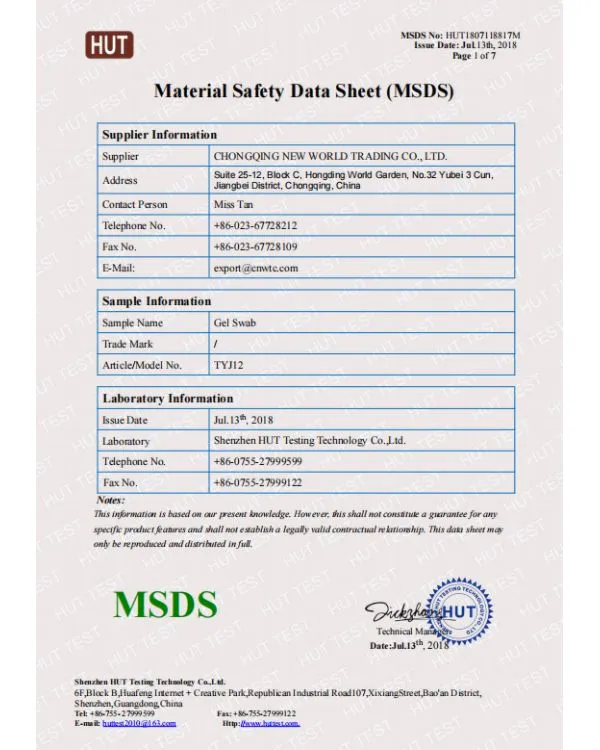
Our Certificate
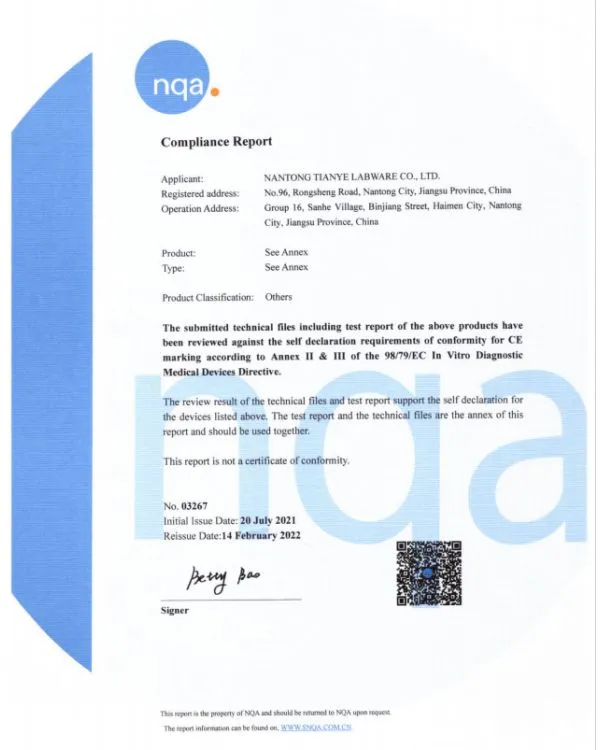
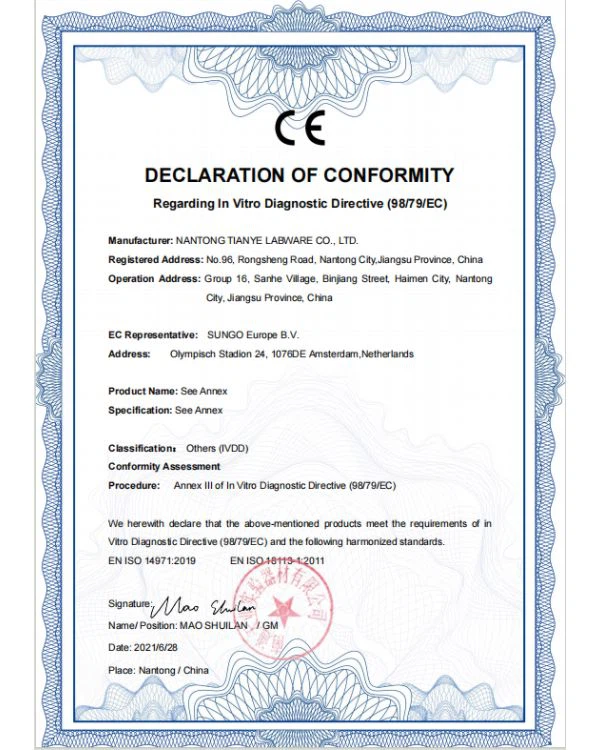
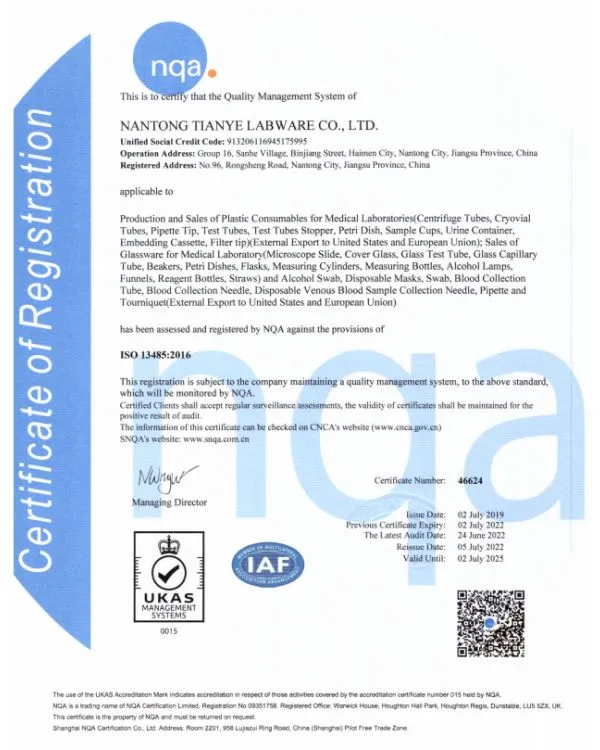
FAQ
Q: What are reagent bottles made of?
Q: What are the different sizes of reagent bottles?
Q: What is the purpose of a reagent bottle?
Q: How do you choose the right reagent bottle?
Q: Can reagent bottles be used for volatile substances?
Q: Can reagent bottles be used for corrosive substances?
Q: Can reagent bottles be used for light-sensitive substances?
Q: Can reagent bottles be used for powders?
Q: Can reagent bottles be used for air-sensitive substances?
Q: Can reagent bottles be used for high-temperature applications?
Q: Can reagent bottles be used for low-temperature applications?
Q: Can reagent bottles be used for storing acids?
Q: Can reagent bottles be used for storing bases?
Q: Can reagent bottles be used for storing flammable substances?
Q: Can reagent bottles be used for storing toxic substances?
Q: Can reagent bottles be used for storing biological samples?
Q: Can reagent bottles be customized?
Q: Can reagent bottles be autoclaved?
Q: Can reagent bottles be used for non-laboratory applications?
Q: Can reagent bottles be recycled?
We're well-known as one of the leading reagent bottle manufacturers in China. If you're going to buy cheap reagent bottle in stock, welcome to get quotation and free sample from our factory. Good service and low price are available.
Laboratory Glass Narrow Mouth Reagent Bottle, 250ml 500ml 1000ml Borosilicate Glass Reagent Media Bottle With Blue Screw Cap, chemistry glass flask