


Weighing Bottles
What Are Weighing Bottles
Weighing bottles are small, cylindrical containers designed to hold powders, solids, or liquids for precise measurement and weighing. They are typically made of glass or plastic and have a narrow neck that allows for easy filling and weighing. Weighing bottles are used in scientific laboratories and other settings where accurate measurement is important. They are often used in conjunction with laboratory balances to measure the mass of the contents with precision. Some weighing bottles have lids or stoppers to prevent contamination or to contain the contents during transport or storage. Overall, weighing bottles are essential tools for precise measurement and weighing in many scientific and industrial applications.
Advantages of Weighing Bottles
Accuracy and precision
Weighing bottles are designed for precise measurements, ensuring accurate results. The tare function can subtract the bottle's empty weight from the total weight, further improving measurement accuracy. This accuracy is critical in experiments that require precise measurements, such as chemical reactions or biological assays.
Versatility
Weighing bottles are suitable for a variety of applications. They can be used to measure solid materials, liquids, and even powders. The bottle's ergonomic design and easy-to-clean surface make it suitable for use in benchtop and automated weighing systems.
Easy to use
Weighing bottles are easy to use and require minimal training or expertise. Users can easily tare bottles, add ingredients and read the weight on the scale. The simple design ensures easy operation even for laboratory novices.
Portability
Weighing bottles are lightweight and easy to transport, making them convenient for use when working in the field or away from traditional laboratory environments. This portability enables scientists to perform weighing tasks wherever needed, whether in the laboratory, in the field, or even at a remote research station.
-
![Laboratory Glass Weighing Bottles Tall Form with Ground Glass Stopper]() Laboratory Glass Weighing Bottles Tall Form with Ground G...Weighing Bottles with Ground Glass Stopper are used for precise weighing of solids. Glass Weighing Bottles are designed with a narrow neck and a wide base to provide stability and minimize the...read more
Laboratory Glass Weighing Bottles Tall Form with Ground G...Weighing Bottles with Ground Glass Stopper are used for precise weighing of solids. Glass Weighing Bottles are designed with a narrow neck and a wide base to provide stability and minimize the...read more -
![Lab Glassware Borosilicate 3.3 Glass Low Form Weighing Bottles]() Lab Glassware Borosilicate 3.3 Glass Low Form Weighing Bo...Lab weighing bottles are containers for weighing specimens by the differential reduction method. It is suitable for weighing moisture-absorbent specimens because it has an abrasive stopper that...read more
Lab Glassware Borosilicate 3.3 Glass Low Form Weighing Bo...Lab weighing bottles are containers for weighing specimens by the differential reduction method. It is suitable for weighing moisture-absorbent specimens because it has an abrasive stopper that...read more


Why Choose Us
Advanced equipment
A machine, tool or instrument designed with advanced technology and functionality to perform highly specific tasks with greater precision, efficiency and reliability.
High quality
Our products are manufactured or executed to a very high standard, using the finest materials and manufacturing processes.
Professional team
Our professional team collaborates and communicates effectively with each other, and is dedicated to delivering high quality results. We are capable of handling complex challenges and projects that require our specialized expertise and experience.
Quality control
We have built a professional quality control team to accurately inspect every raw material and every production process.
Customized services
We understand that each customer has unique manufacturing needs. That’s why we offer customization options to cater to your specific requirements.
24H online service
We try and respond to all concerns within 24 hours and our teams are always at your disposal in case of any emergencies.
Types of Weighing Bottles
Glass weighing bottles
Glass weighing bottles are made of high-quality glass and are ideal for use with powders, solids, and liquids. They are transparent, which makes it easy to monitor the sample during weighing, and they are heat-resistant, which allows for the use of hot samples. Glass weighing bottles are available in various sizes and shapes to accommodate different sample volumes.
Plastic weighing bottles
Plastic weighing bottles are lightweight and inexpensive, making them a popular choice for general laboratory use. They are suitable for use with many chemicals and can be easily molded into different shapes and sizes. Plastic weighing bottles are also less fragile than glass bottles, which makes them less likely to break or shatter during use.
Teflon weighing bottles
Teflon weighing bottles are coated with a non-stick material that prevents the sample from sticking to the bottle. They are suitable for use with corrosive chemicals and can withstand high temperatures. However, teflon weighing bottles may be more expensive than other materials.
Silica gel weighing bottles
Silica gel weighing bottles are designed for use with moisture-sensitive samples. They contain a desiccant that absorbs any moisture that may be present in the sample. This makes them ideal for use with powders and solids that are prone to absorbing moisture from the air.
Magnetic weighing bottles
Magnetic weighing bottles have a magnetic base that allows them to be easily attached to a magnetic stirrer. This makes them suitable for use with liquids that require stirring during weighing. Magnetic weighing bottles are often used in conjunction with laboratory balances and magnetic stirrers to achieve accurate and precise measurement of liquids.
Autoclaveable weighing bottles
Autoclaveable weighing bottles are designed for use in applications where the sample needs to be sterilized before weighing. They are made of materials that can withstand the high temperatures and pressures of autoclaving, which makes them suitable for use in medical and pharmaceutical laboratories.
How to Store Weighing Bottles
Choose the right storage location
Store weighing bottles in a dry, clean, and dust-free environment. Avoid storing them in areas with high humidity, extreme temperatures, or direct sunlight, as these conditions can affect their accuracy and longevity.
Organize bottles properly
Arrange weighing bottles in a systematic manner to avoid confusion and facilitate easy retrieval. Label each bottle with the corresponding weight and material it was used for, if any. You can also group them based on size, shape, or material.
Keep bottles separate
To prevent cross-contamination, store each weighing bottle separately. Use a tray or container with individual compartments to hold each bottle. If you use a container without compartments, place a piece of paper or cardboard between each bottle.
Protect bottles from damage
To prevent damage, handle weighing bottles with care. Avoid dropping, banging, or squeezing them. When storing, ensure the caps are tightly closed to prevent any material from spilling out or moisture from entering.
Clean and dry bottles before storage
Always clean and dry weighing bottles thoroughly before storage. Wipe the outside of the bottles with a lint-free cloth to remove any dust or debris. Check the inside of the bottles for any residue and clean them if necessary. Ensure the bottles are completely dry before storage to prevent any moisture from affecting the weight accuracy.
Regular maintenance
Regularly check and maintain the weighing bottles to ensure their accuracy and performance. Inspect them for any visible signs of damage, such as cracks, chips, or warping. Replace any damaged bottles promptly.
Store in original packaging
If possible, store the weighing bottles in their original packaging. The packaging provides an extra layer of protection and helps to keep the bottles free from dust and contaminants.
Avoid mixing with other chemicals
Store weighing bottles away from other chemicals to prevent contamination. Keep them in a separate storage area or cabinet designated only for weighing bottles.
Application of Weighing Bottles
Accurate measurement
Weighing bottles are used to measure the weight of solid samples with precision. They are used to measure the weight of samples before and after an experiment, allowing for accurate measurement of changes in weight.
Containment
Weighing bottles provide a secure container for holding solid samples during weighing. They prevent the samples from spilling out or being contaminated by dust or other particles in the environment.
Reproducibility
Weighing bottles are designed for use with analytical balances, which allows for precise and repeatable measurements. The use of weighing bottles ensures that the same conditions are maintained for each measurement, which enhances the reproducibility of the results.
Compatibility
Weighing bottles are compatible with a wide range of materials and substances. They can be used to weigh a variety of solid materials, such as powders, pills, and chemicals, making them versatile tools in scientific laboratories.
Sample preparation
Weighing bottles are often used in sample preparation procedures. For example, they can be used to weigh out a precise amount of a substance for analysis or to prepare a standard solution.
Quality control
Weighing bottles are used in quality control procedures to ensure the accuracy and consistency of manufacturing processes. They can be used to weigh raw materials, monitor process parameters, and verify finished products.
Research and development
Weighing bottles are used in research and development activities to measure the properties of new materials, compounds, and formulations. They are used to determine the composition, purity, and concentration of samples.
Education
Weighing bottles are commonly used in educational settings to teach students about the principles of measurement and analysis. They are used in laboratory experiments to demonstrate concepts such as stoichiometry and solution preparation.
Precautions When Using Weighing Bottles
Cleanliness
Weighing bottles should always be clean and free from contaminants before use. Depending on the type of sample being weighed, cleaning protocols may vary. For example, solvents or acids may need to be used to clean glass bottles, while plastic bottles may require soap and water.
Handling
Care should be taken when handling weighing bottles to avoid damaging them or causing spills. Glass bottles are particularly fragile and can shatter if dropped or bumped. Plastic bottles are more durable but can still be easily damaged if not handled properly.
Storage
Weighing bottles should be stored in a dry, dust-free environment when not in use. This helps to prevent contamination and ensures that the bottles are ready for use when needed.
Use with compatible equipment
Weighing bottles should be used with compatible equipment, such as a laboratory balance or magnetic stirrer, to ensure accurate and precise measurements. It is important to follow the manufacturer's guidelines for use with specific equipment.
Avoid cross-contamination
To prevent cross-contamination, it is important to use a clean weighing bottle for each sample. Reusing bottles can lead to inaccurate measurements and potentially hazardous situations.
Use proper technique
When using weighing bottles, it is important to follow proper technique to ensure accurate results. This includes avoiding drafts or vibrations that can affect the weighing process, using the correct size and shape of bottle for the sample being weighed, and ensuring that the bottle is completely dry before weighing.
Personal protective equipment
Depending on the type of sample being weighed, personal protective equipment such as gloves, goggles, or a lab coat may be required. This helps to protect the user from potential hazards and ensures a safe working environment.
Regular maintenance
Regular maintenance of weighing bottles and associated equipment is important to ensure accurate measurements over time. This may include checking and adjusting the calibration of laboratory balances, inspecting bottles for damage or wear, and cleaning equipment according to manufacturer guidelines.
How to Use Weighing Bottles
Prepare the balance
Before using the weighing bottle, ensure that the balance is properly calibrated and ready for use. Check the balance settings, zero the balance, and ensure that the weighing chamber is clean and free from dust or debris.
Choose the right weighing bottle
Select the appropriate weighing bottle based on the sample size and the balance capacity. Ensure that the weighing bottle is compatible with the balance and suitable for the sample material.
Clean the weighing bottle
Clean the weighing bottle thoroughly before use to remove any dust or debris that may affect the accuracy of the measurement. Use laboratory-grade cleaning solutions and a lint-free cloth to clean the inside and outside of the bottle.
Place the weighing bottle on the balance
Carefully place the clean weighing bottle on the balance pan, making sure that it is centered and stable. Avoid touching the sides of the balance chamber, as this can cause vibrations and affect the accuracy of the measurement.
Tare the balance
Press the tare button on the balance to zero the weight reading. This ensures that the weight of the empty weighing bottle is not included in the measurement.
Add the sample
Carefully add the solid sample to the weighing bottle using a clean and dry spatula or scoop. Avoid touching the inside of the weighing bottle or the sample with your hands, as this can contaminate the sample and affect the accuracy of the measurement.
Weigh the sample
Once the sample has been added, wait for a few seconds to allow the balance to stabilize and then take a weight reading. Record the weight value and note any discrepancies or errors.
Remove the weighing bottle
Carefully remove the weighing bottle from the balance pan and place it in a clean and dry container or tray. Avoid touching the inside of the weighing bottle or the sample with your hands.
Clean up
Clean up any spills or residue from the balance chamber and ensure that the weighing bottle and spatula are clean and ready for the next use.
Material
Weighing bottles can be made of a variety of materials, including glass, plastic, teflon, and silica gel. Each material has unique characteristics that make it suitable for different types of samples. Glass bottles are ideal for use with powders, solids, and liquids and are heat-resistant, while plastic bottles are lightweight and inexpensive and can be easily molded into different shapes and sizes. Teflon bottles are coated with a non-stick material that prevents the sample from sticking to the bottle, and silica gel bottles contain a desiccant that absorbs any moisture that may be present in the sample.
Size and shape
Weighing bottles come in various sizes and shapes to accommodate different sample volumes. It is important to choose the appropriate size and shape of bottle for the sample being weighed to ensure accurate and precise measurements. Larger bottles may be more suitable for bulk samples, while smaller bottles may be better for precise measurements of small sample volumes.
Compatibility
Weighing bottles should be used with compatible equipment, such as a laboratory balance or magnetic stirrer, to ensure accurate and precise measurements. It is important to follow the manufacturer's guidelines for use with specific equipment to avoid any issues that may affect the weighing process.
Cleanliness
Weighing bottles should always be clean and free from contaminants before use. Depending on the type of sample being weighed, cleaning protocols may vary. For example, solvents or acids may need to be used to clean glass bottles, while plastic bottles may require soap and water. It is important to choose a weighing bottle that can be easily cleaned and maintained to ensure accurate results over time.
Personal protective equipment
Depending on the type of sample being weighed, personal protective equipment such as gloves, goggles, or a lab coat may be required. This helps to protect the user from potential hazards and ensures a safe working environment. It is important to choose a weighing bottle that is compatible with the necessary personal protective equipment.
Cost
The cost of weighing bottles can vary depending on the material, size, and manufacturer. It is important to consider the budget of the laboratory when choosing weighing bottles and to select a product that offers the best value for money while still meeting the required specifications.
What Are Weighing Bottles Made Of?
Weighing bottles are a type of laboratory equipment commonly used for weighing solid materials. They are designed to hold a small amount of material and are typically made of materials that do not interact with the substance being weighed. Glass weighing bottles are a popular choice due to their transparency, which allows for easy visualization of the sample being weighed. They are typically made of borosilicate glass, which is resistant to thermal shock and can withstand high temperatures. Plastic weighing bottles are another option and are often more economical than glass. They are typically made of polypropylene or other similar materials that are chemically resistant and can withstand various temperatures. Plastic weighing bottles are often preferred for applications where the sample may react with glass. Aluminum weighing bottles are also available and are often used for applications where the sample may be corrosive or react with other materials. Aluminum weighing bottles are lightweight and can withstand high temperatures. Ceramic weighing bottles are also an option and are often used for applications where the sample may be corrosive or react with other materials. Ceramic weighing bottles are non-reactive and can withstand high temperatures.
What Are the Different Sizes of Weighing Bottles?
10-200 mg
This is the smallest size of weighing bottles, typically used for measuring small amounts of solid materials such as powders, salts, and crystals. They are ideal for experiments requiring precision and accuracy in weighing small amounts of materials.
200-500 mg
This size of weighing bottles is slightly larger than the 10-200 mg size, making them suitable for measuring larger amounts of solid materials. They are commonly used for experiments requiring the measurement of larger amounts of powders, salts, and crystals.
500 mg-1 g
This size of weighing bottles is larger than the previous sizes, making them suitable for measuring larger amounts of solid materials. They are commonly used for experiments requiring the measurement of larger amounts of powders, salts, and crystals.
1-2 g
This size of weighing bottles is larger than the previous sizes, making them suitable for measuring larger amounts of solid materials. They are commonly used for experiments requiring the measurement of larger amounts of powders, salts, and crystals.
2-5 g
This size of weighing bottles is larger than the previous sizes, making them suitable for measuring larger amounts of solid materials. They are commonly used for experiments requiring the measurement of larger amounts of powders, salts, and crystals.
5-10 g
This is the largest size of weighing bottles commonly used in scientific laboratories. They are ideal for experiments requiring the measurement of larger amounts of solid materials such as chemicals, powders, and salts.
Weighing bottles are a type of laboratory equipment commonly used for weighing solid materials. While they are not typically designed for use with volatile substances, they can be used for this purpose under certain conditions. When using weighing bottles for volatile substances, it's crucial to choose materials that are compatible with the substance being weighed. Some substances may react with the material of the weighing bottles, leading to potential safety hazards and inaccurate experimental results. Glass or ceramic weighing bottles are generally safe and non-reactive and can be used for weighing volatile substances. The design of weighing bottles can also affect their suitability for use with volatile substances. Weighing bottles with a tightly fitting lid can help prevent the escape of volatile gases. Additionally, using weighing bottles with a small opening can help minimize the loss of volatile substances during weighing. Volatile substances are sensitive to temperature changes, and controlling the temperature is crucial for accurate experimental results. It's essential to monitor the temperature of the weighing bottles during weighing to ensure that the temperature remains within the appropriate range for the substance being weighed. When using weighing bottles for volatile substances, it's crucial to follow proper safety precautions to prevent potential hazards. Always wear appropriate personal protective equipment, such as gloves, goggles, and a lab coat, and work in a well-ventilated area. Avoid skin and eye contact with the substance being weighed, and follow proper waste disposal procedures.

Can Weighing Bottles Be Used for Long-Term Storage?

Weighing bottles are a type of laboratory equipment commonly used for weighing solid materials. While they are not typically designed for long-term storage, they can be used for this purpose under certain conditions. When using weighing bottles for long-term storage, it's crucial to choose materials that are compatible with the substance being stored. Some substances may react with the material of the weighing bottles, leading to potential degradation of the substance over time. Glass or ceramic weighing bottles are generally safe and non-reactive and can be used for long-term storage. The design of weighing bottles can also affect their suitability for long-term storage. Weighing bottles with a tightly fitting lid can help prevent contamination and maintain the integrity of the substance being stored. Additionally, using weighing bottles with a small opening can help minimize exposure to air and moisture, which can degrade the substance over time. Long-term storage of substances in weighing bottles requires proper storage conditions to prevent degradation and contamination. It's essential to store the weighing bottles in a cool, dry, and dark place to minimize exposure to light, heat, and moisture. Additionally, it's crucial to label the weighing bottles with the name of the substance and the date of storage to facilitate tracking and monitoring of the stored substances.
Our factory
Hongqing New Way Trading Co., Limited located Chongqing, in the south west of China. Neway is a Modern Enterprise which specialized in developing, manufacturing and marketing of lab glasswares, plastic disposables and medical consumables, which has a complete independent research and industrial line.With perfect organization and advanced management, Neway has one professional work team which engaged in the products development and production control. We have already established relationship for product development cooperation with a number of well known domestic and foreign companies. Our main products include medical consumables, laboratory plastic consumables and glass products. We have more than three hundred products, such as blood collection tube, blood lancets, bandages, female swabs, centrifuge tube, test tube, pipette tip, petri dish, cuvettes, glass slide, glass beakers and others, all the products can do OEM as customer required.


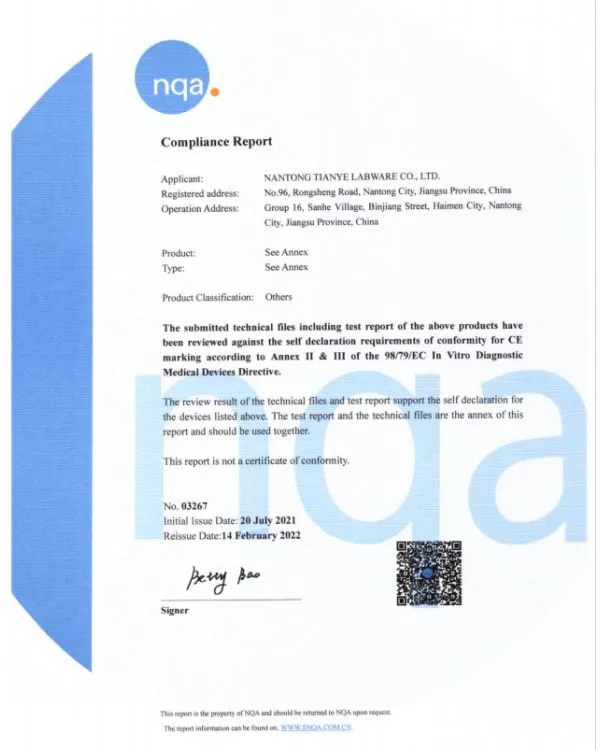
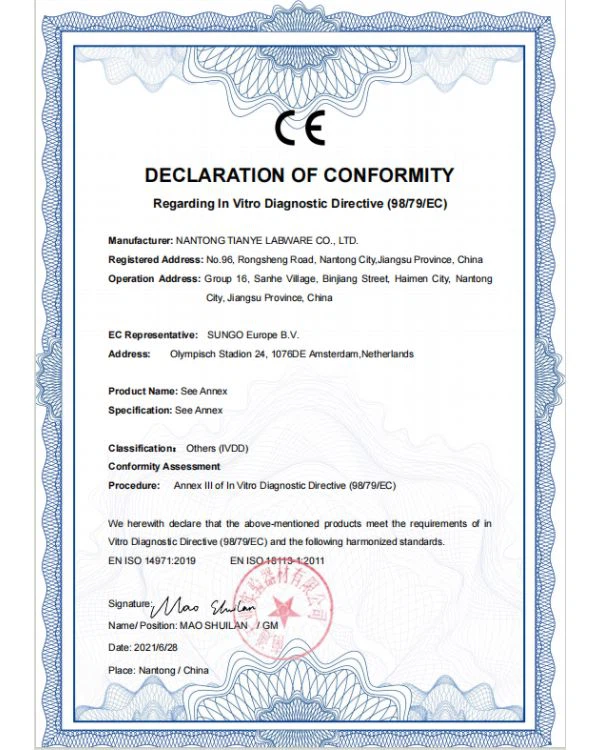
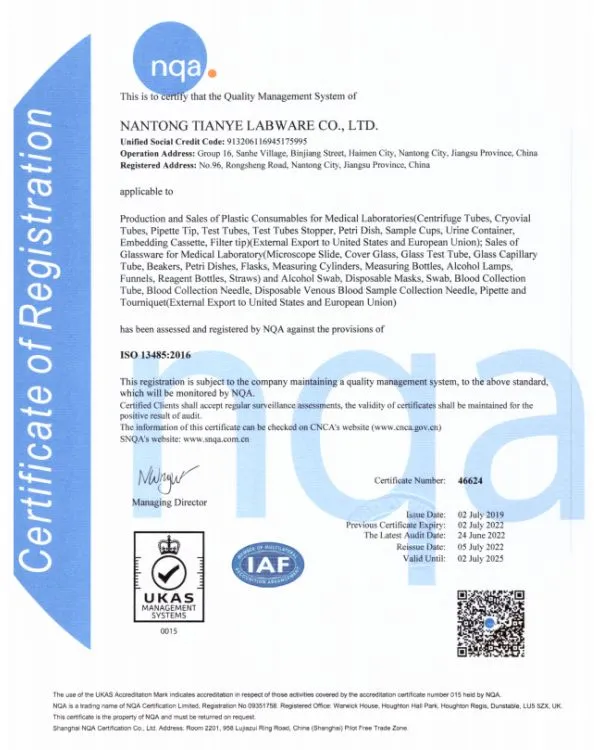
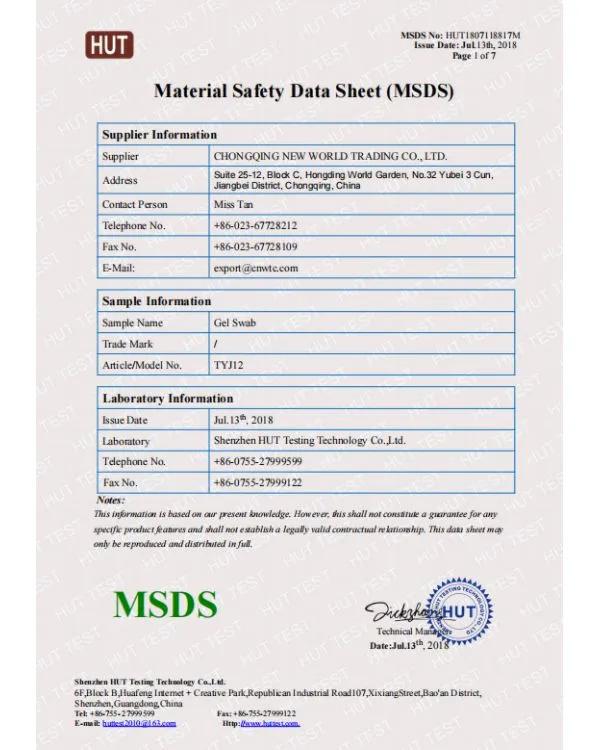
Our Certificate
FAQ
Q: What are the different sizes of weighing bottles?
Q: What is the purpose of a weighing bottle?
Q: How do you use a weighing bottle?
Q: Can weighing bottles be used for hygroscopic substances?
Q: Can weighing bottles be used for volatile substances?
Q: Can weighing bottles be used for high-temperature applications?
Q: Can weighing bottles be used for corrosive substances?
Q: Can weighing bottles be used for light-sensitive substances?
Q: Can weighing bottles be used for liquids?
Q: Can weighing bottles be used for air-sensitive substances?
Q: Can weighing bottles be used for moisture-sensitive substances?
Q: Can weighing bottles be used for long-term storage?
Q: Can weighing bottles be used for quality control?
Q: Can weighing bottles be used for pharmaceutical applications?
Q: Can weighing bottles be used for environmental analysis?
Q: Can weighing bottles be used for educational purposes?
Q: Can weighing bottles be reused?
Q: Can weighing bottles be customized?
Q: Can weighing bottles be autoclaved?
Q: Can weighing bottles be used for non-laboratory applications?
We're well-known as one of the leading weighing bottles manufacturers in China. If you're going to buy cheap weighing bottles in stock, welcome to get quotation and free sample from our factory. Good service and low price are available.
Conical Flask With Graduation