

Glass Beakers
What Are Glass Beakers
Glass beakers are vessels used in laboratories to hold liquids or solutions. They are made of glass and have a round bottom and a narrow neck. Glass beakers are used for a variety of purposes, including measuring liquids, mixing chemicals, and conducting experiments. They are also used to store liquids and solutions for later use. Glass beakers come in a variety of sizes and shapes, depending on their intended use.
Advantages of Glass Beakers
Durability and chemical resistance
Glass beakers are made of high-quality glass and are highly durable and resistant to most acids, alkalis, and other chemicals commonly used in scientific experiments. This makes them suitable for a wide range of applications, from basic laboratory procedures to complex chemical reactions.
Transparency
Glass beakers are transparent, allowing researchers to easily observe the contents of the beaker, including any reactions or changes occurring within them. This transparency also makes it easy to measure the volume of liquid in the beaker.
Temperature control
Glass has a relatively low coefficient of thermal expansion, making it easier to maintain a precise temperature when heating or cooling the contents of the beaker. This is important in experiments that require precise temperature control, such as in heating or cooling reactions.
Easy to clean
Glass beakers are easy to clean and sterilize, suitable for use in sterile or hygienic environments. After use, they can be washed thoroughly with soap and water or sterilized in an autoclave to remove any remaining contaminants or bacteria.
Non-reactive
Glass does not react with most chemicals, meaning it will not introduce any contaminants into your experiments. This ensures your results are accurate and reliable, giving you peace of mind that your experiments are conducted under controlled conditions.
Easy to handle
Glass beakers have narrow mouths, which makes them easy to pour, measure and transfer liquids. The narrow mouth also helps prevent evaporation, making your experiments more controlled and precise.
-
![5ml-10000ml Low Form Graduated Borosilicate Glass Beaker with Sprout]() 5ml-10000ml Low Form Graduated Borosilicate Glass Beaker ...Borosilicate glass beaker is designed for holding, mixing, and heating liquids. It's made from borodilicate glass material, Low Form Glass Beaker is durability, transparency, and resistance to...read more
5ml-10000ml Low Form Graduated Borosilicate Glass Beaker ...Borosilicate glass beaker is designed for holding, mixing, and heating liquids. It's made from borodilicate glass material, Low Form Glass Beaker is durability, transparency, and resistance to...read more -
![25ml-3000ml Tall Form Glass Measuring Beaker Cup With Graduations]() 25ml-3000ml Tall Form Glass Measuring Beaker Cup With Gra...The clear glass measuring cup is made of high-quality borosilicate glass material, offering excellent thermal resistance and chemical inertness to withstand various laboratory conditions.read more
25ml-3000ml Tall Form Glass Measuring Beaker Cup With Gra...The clear glass measuring cup is made of high-quality borosilicate glass material, offering excellent thermal resistance and chemical inertness to withstand various laboratory conditions.read more -
![125-500ml Borosilicate Philips Conical Glass Beakers with Spout]() 125-500ml Borosilicate Philips Conical Glass Beakers with...Conical Glass Beakers has a conical shape, featuring a broader base tapering to a narrower top. Crafted from durable glass, these beakers serve various scientific and industrial purposes.read more
125-500ml Borosilicate Philips Conical Glass Beakers with...Conical Glass Beakers has a conical shape, featuring a broader base tapering to a narrower top. Crafted from durable glass, these beakers serve various scientific and industrial purposes.read more


Why Choose Us
Advanced equipment
A machine, tool or instrument designed with advanced technology and functionality to perform highly specific tasks with greater precision, efficiency and reliability.
High quality
Our products are manufactured or executed to a very high standard, using the finest materials and manufacturing processes.
Professional team
Our professional team collaborates and communicates effectively with each other, and is dedicated to delivering high quality results. We are capable of handling complex challenges and projects that require our specialized expertise and experience.
Quality control
We have built a professional quality control team to accurately inspect every raw material and every production process.
Customized services
We understand that each customer has unique manufacturing needs. That’s why we offer customization options to cater to your specific requirements.
24H online service
We try and respond to all concerns within 24 hours and our teams are always at your disposal in case of any emergencies.
Types of Glass Beakers
Glass beakers are essential laboratory equipment used for storing, mixing, and heating a variety of liquids. They are commonly used in educational institutions, research facilities, and manufacturing plants. Glass beakers come in various types, each with its unique characteristics and uses. One of the most common types of glass beakers is the flat-bottom beaker. As the name suggests, this type of beaker has a flat bottom, which makes it stable when placed on a laboratory bench or tray. Flat-bottom beakers are available in different sizes and are used for storing and mixing liquids. Another type of glass beaker is the conical beaker. Conical beakers have a conical shape, which makes them ideal for use in filtration and titration experiments. The conical shape allows for the easy flow of liquids and ensures that the liquid is evenly distributed during filtration or titration. Graduated beakers are another type of glass beaker commonly used in laboratories. Graduated beakers have markings on the side that indicate the volume of the liquid inside. This allows laboratory technicians to accurately measure the volume of the liquid they are working with. Graduated beakers are available in different sizes and are used for a variety of experiments, including titration and volumetric analysis. Mortar beakers are a unique type of glass beaker that is used for grinding and mixing solid substances. The mortar beaker has a cylindrical shape with a pestle that is used to grind and mix the substance. Mortar beakers are commonly used in pharmacology and chemistry laboratories. Another type of glass beaker is the Erlenmeyer flask. Erlenmeyer flasks have a conical shape with a narrow neck. They are commonly used for mixing and heating liquids and are available in different sizes. Erlenmeyer flasks are often used in microbiology and chemistry laboratories.
How to Store Glass Beakers
Choose the right location
Glass beakers should be stored in a dry, cool, and dust-free area. Exposure to direct sunlight or extreme temperatures can cause glass beakers to break or shatter.
Organize beakers by size
Glass beakers come in different sizes, and organizing them by size can help in quick identification and retrieval. Store larger beakers at the bottom, and smaller ones at the top.
Use proper storage racks
Glass beakers should be stored on sturdy, well-designed racks that can support the weight of the beakers. The racks should have sufficient space between each shelf to prevent the beakers from touching each other and causing damage.
Handle with care
When handling glass beakers, always use both hands and support the bottom of the beaker. Never carry more than one beaker at a time, as this can cause the beakers to tip over and break.
Inspect beakers regularly
Regular inspection of glass beakers can help identify any cracks or chips that may have occurred during storage or use. Damaged beakers should be disposed of immediately to prevent further damage or injury.
Keep beakers clean
Clean glass beakers thoroughly before storing them to prevent dust or debris from accumulating on the surface. Wipe the beakers with a clean, dry cloth or use a mild detergent solution for stubborn stains.
Label beakers
Labeling glass beakers can help in quick identification and avoid confusion. Use a permanent marker to label the beaker with its size, capacity, and any other relevant information.
Avoid mixing chemicals
Never store glass beakers containing chemicals together, as this can cause a dangerous reaction. Always label the beakers with the type of chemical they contain and store them in a separate area.
Use proper cleaning agents
When cleaning glass beakers, use only recommended cleaning agents. Harsh chemicals can damage the surface of the beakers and cause them to break.
Regular maintenance
Regular maintenance of the storage area and the racks can help prevent any damage to the glass beakers. Check the racks regularly for any defects, and repair or replace them as needed.
Application of Glass Beakers
Measuring liquids
Glass beakers are often used to accurately measure liquids. They have graduated markings on the side, allowing the user to accurately measure the volume of liquid.
Mixing chemicals
Glass beakers are used for mixing chemicals in the laboratory. They are easy to clean and do not react with chemicals, making them suitable for use in chemical reactions.
Conduct experiments
Glass beakers are used to conduct experiments in the laboratory. They are transparent, allowing the user to easily observe reactions inside the beaker.
Storage of liquids
Glass beakers are used in laboratories to store liquids. They are leak-proof and seal tightly to prevent liquid leakage.
Heating liquids
Glass beakers are used to heat liquids in the laboratory. They can withstand high temperatures and are suitable for heating experiments.
Teaching
Glass beakers are used in teaching laboratories to demonstrate chemical reactions and experiments. They are transparent, allowing students to easily observe reactions inside the beaker.
Precautions When Using Glass Beakers
Wear appropriate lab attire
Always wear a laboratory coat, gloves, and goggles when using glass beakers. This can protect you from chemicals, heat, and broken glass.
01
Handle with care
Glass beakers are fragile and can easily break if not handled with care. Always support the bottom of the beaker when picking it up, and avoid carrying more than one at a time.
02
Use appropriate utensils
Never use metal utensils to stir or heat liquids in glass beakers, as this can cause the glass to shatter. Use laboratory-grade plastic or heat-resistant glass utensils instead.
03
Avoid overfilling
Never overfill glass beakers, as this can cause the liquid to overflow and cause damage or injury. Always leave a small amount of space at the top of the beaker when filling it with liquid.
04
Use proper heating techniques
When heating liquids in glass beakers, use a hot plate or magnetic stirrer, and avoid using an open flame. Always heat the liquid slowly and stir it frequently to prevent boiling over.
05
Avoid chemicals
Never use glass beakers to store or mix chemicals without proper training and authorization. Some chemicals can react with glass and cause it to shatter.
06
Clean beakers properly
Clean glass beakers thoroughly before and after use to prevent the buildup of residue or contamination. Use a mild detergent solution and rinse thoroughly with water.
07
Inspect beakers regularly
Regularly inspect glass beakers for any cracks or chips that may have occurred during use or storage. Damaged beakers should be disposed of immediately to prevent further damage or injury.
08
Store beakers properly
Proper storage of glass beakers is crucial to ensure their longevity and to prevent damage. Store beakers in a dry, cool, and dust-free area on sturdy, well-designed racks.
09
Follow safety guidelines
Always follow laboratory safety guidelines when using glass beakers, including proper waste disposal, emergency procedures, and the use of personal protective equipment.
10
Raw material selection
The first step in the process of making glass beakers is selecting the raw materials. The primary ingredient in glass beakers is silica sand, which is combined with soda ash, calcium carbonate, and other materials to achieve the desired properties of the glass.
Melting
The raw materials are then transported to a furnace, where they are heated to a molten state. The furnace operates at temperatures ranging from 1,500 to 1,700 degrees celsius, which causes the raw materials to melt and form a homogeneous mixture.
Forming
The molten glass is then transported to the forming station, where it is shaped into beakers. There are several methods for forming glass beakers, including blowing, pressing, and spinning. The choice of method depends on the desired shape and size of the beaker.
Annealing
After forming, the beakers are placed in an annealing oven, where they are heated to a specific temperature and then slowly cooled. This process reduces the internal stress in the glass and makes it less prone to cracking or breaking.
Inspection
Once the beakers have undergone annealing, they are inspected to ensure that they meet the required quality standards. Inspectors check the beakers for defects such as cracks, chips, and bubbles, and they measure the beakers to ensure that they are the correct size and shape.
Packaging
Finally, the beakers are packaged and labeled for distribution. The packaging should protect the beakers during shipping and handling and should provide information on the beakers' specifications and usage instructions.
How to Install Glass Beakers
Prepare the necessary tools and materials
Before starting the installation process, you need to prepare the necessary tools and materials, including pliers, screwdrivers, screws, and rubber washers.
Clean the glass beaker
Before installing the glass beaker, you need to clean the glass beaker to remove dirt and debris. Use a clean cloth or sponge to wipe the inside and outside of the glass beaker.
Mount the glass beaker
Use pliers to hold the glass beaker and screw the screw into the bottom of the glass beaker. Make sure the screw is tightened firmly to ensure the stability of the glass beaker.
Install the rubber washer
After mounting the glass beaker, install the rubber washer on the screw to prevent leakage.
Install the glass beaker onto the stand
Place the glass beaker onto the stand and align the screw with the hole in the stand. Use pliers to tighten the screw to ensure the stability of the glass beaker.
Test the glass beaker
After installing the glass beaker, test it to ensure it is stable and does not leak. Pour some water into the glass beaker and check for leaks.
How Do I Choose the Right Glass Beakers


Material
Glass beakers are typically made of either borosilicate or soda-lime glass. Borosilicate glass is more resistant to thermal shock and has a higher melting temperature, making it ideal for laboratory use. Soda-lime glass is less expensive but more prone to breakage due to temperature changes.
Capacity
Glass beakers come in various capacities, ranging from a few milliliters to several liters. Choose the capacity that best suits your needs, taking into account the size of your samples and the volume of your experiments.
Shape
Glass beakers come in different shapes, such as conical, cylindrical, and round-bottomed. The shape of the beaker can affect its stability, heat distribution, and ease of use. Consider the type of experiment you will be performing and choose the shape that is most suitable.
Quality
High-quality glass beakers are essential for accurate and precise measurements. Look for beakers that are made by reputable manufacturers and have been certified for accuracy. Check the markings on the beakers to ensure they are clear and legible.
Airtight seals
If you will be using glass beakers for storage, choose models that have airtight seals to prevent contamination and preserve the integrity of your samples.
Price
Glass beakers can vary widely in price depending on the material, quality, and capacity. Determine your budget and choose the best option within that range. Remember that quality is often more important than price when it comes to laboratory equipment.
Compatibility
Check that the glass beakers you choose are compatible with the other equipment you will be using in your experiments. For example, if you are using a hot plate, make sure the beakers are heat-resistant.
Safety
Always choose glass beakers that are designed for laboratory use and comply with safety standards. Avoid using beakers that are chipped, cracked, or otherwise damaged.
Size
Consider the amount of space you have in your laboratory and choose glass beakers that are appropriately sized for your needs. Overfilling a beaker can lead to spills and accidents, while underfilling can affect the accuracy of your measurements.
Special features
Some glass beakers have special features such as graduations for precise measurements, spouts for easy pouring, or magnetic stirring bars for mixing samples. Consider these features if they are relevant to your experiments.
A glass beaker is a container made of glass used in laboratories to hold liquids or solutions. They are usually round in shape with a flat base and a narrow neck that tapers to the mouth. Glass beakers are made from different types of glass, depending on their intended use and required properties. The most common type of glass used to make glass beakers is borosilicate glass. Borosilicate glass is a type of heat-resistant glass that can withstand high temperatures without cracking or shattering. It is also resistant to chemicals and acids, making it suitable for use in chemistry laboratories. Borosilicate glass is transparent, allowing the user to clearly see the contents of the beaker. Another type of glass used in making glass beakers is soda-lime glass. Soda-lime glass is a cheaper alternative to borosilicate glass, but it is not as resistant to heat or chemicals as borosilicate glass. Soda-lime glass is also not as clear as borosilicate glass, which makes it difficult to see the contents of the beaker. In addition to borosilicate and soda-lime glass, some glass beakers are also made from quartz glass. Quartz glass is a high-purity glass with extremely high heat and chemical resistance. It is often used in applications where extreme temperatures or corrosive chemicals are present. Quartz glass is also transparent, allowing the user to clearly see the contents of the beaker. The choice of glass material used to make a glass beaker depends on the intended use of the beaker and the required properties. Borosilicate glass is the most common choice for general laboratory use, while soda-lime glass is suitable for less demanding applications. Quartz glass is used in applications where extreme temperatures or corrosive chemicals are present.

Can Glass Beakers Be Used for Heating Substances?
Glass beakers are a common piece of laboratory equipment used for storing, mixing, and heating a variety of substances. They are made of durable glass that can withstand high temperatures and are often used in conjunction with hot plates, burners, or other heating devices. First and foremost, it is important to note that not all glass beakers are created equal. Some beakers are designed for heating purposes and can withstand high temperatures without cracking or shattering. Other beakers are not designed for heating and may break or shatter if exposed to high temperatures. Always check the manufacturer's specifications and recommendations before using a glass beaker for heating purposes. When using glass beakers for heating, it is important to take proper safety precautions to prevent injury or damage to the laboratory equipment. When working with hot glass beakers, it is important to wear laboratory attire that covers your arms and legs to prevent burns. Only use heating devices that are designed for laboratory use and are compatible with the glass beakers you are using. Never use a heating device that is not recommended by the manufacturer. When handling hot glass beakers, always use hot mitts or tongs to protect your hands from burns. Place a heat-resistant mat underneath the hot plate or burner to protect the laboratory surface from heat damage. Never leave a glass beaker unattended when it is on a heating device. Always monitor the beaker closely to ensure that it does not overheat or boil over. Never pick up a hot glass beaker with your bare hands. Always allow the beaker to cool to room temperature before handling it. Clean the glass beaker thoroughly after use to remove any residue or debris. This will help prevent future accidents and ensure the longevity of the beaker.
Can Glass Beakers Be Used for Measuring Volume?
Glass beakers are a staple of any laboratory or chemistry classroom, and they are frequently used for measuring volume. First and foremost, it is important to note that glass beakers are generally considered to be less accurate than graduated cylinders when it comes to measuring volume. However, they are still widely used for this purpose due to their convenience and versatility. Glass beakers typically have markings on the side that indicate the volume of the liquid within the beaker. These markings, also known as graduations, can be used to estimate the volume of a liquid to within 5% accuracy. It is important to read the graduations accurately and to use the appropriate unit of measurement (e.g., milliliters or liters). The meniscus is the curve formed by the surface of a liquid in a container. When reading the graduations on a glass beaker, it is important to read the meniscus at the bottom of the curve to obtain an accurate measurement. Parallax error is a type of error that can occur when reading the graduations on a glass beaker. This occurs when the observer's eye is not level with the liquid in the beaker, causing the liquid to appear higher or lower than it actually is. To avoid parallax error, it is important to hold the beaker steady and align the eye with the meniscus when reading the graduations. The temperature of the liquid being measured can affect its volume. As a general rule, liquids expand as they warm and contract as they cool. It is important to account for temperature changes when measuring volume. Glass beakers are not as precise as other laboratory equipment, such as graduated cylinders or pipettes. When accuracy is crucial, it may be necessary to use more precise equipment.

Glass beakers are essential laboratory equipment used for storing, mixing, and heating a variety of liquids. They are commonly used in educational institutions, research facilities, and manufacturing plants. Proper cleaning of glass beakers is crucial to prevent contamination and ensure accurate experimental results. Rinse the glass beaker with tap water immediately after use to remove any residual liquid or debris. Detergent solutions are effective in removing organic residue and stains from glass beakers. Dilute a small amount of laboratory-grade detergent in water and soak the beaker for a few minutes. Use a laboratory-grade brush to scrub the inside and outside of the beaker. Always start from the bottom and work your way up to prevent the brush from getting caught on the rim. Rinse the beaker thoroughly with water to remove any detergent residue. Use a laboratory-grade brush to help dislodge any remaining stains or residue. Glass beakers can be sanitized with a diluted acid solution, such as nitric acid or sulfuric acid. Soak the beaker in the acid solution for a few minutes, then rinse with water. Dry the beaker with a clean, dry towel or air dry it. Never stack wet beakers on top of each other, as this can cause them to stick together and break. Always inspect the beaker before use to ensure that it is clean and free of any residue or stains. Never use abrasive materials, such as steel wool or sandpaper, to clean glass beakers, as this can scratch the surface and cause damage. Regular cleaning of glass beakers can help prevent the buildup of residue and ensure accurate experimental results. Labeling glass beakers can help in quick identification and avoid confusion. Use a permanent marker to label the beaker with its size, capacity, and any other relevant information.
Our factory
Hongqing New Way Trading Co., Limited located Chongqing, in the south west of China. Neway is a Modern Enterprise which specialized in developing, manufacturing and marketing of lab glasswares, plastic disposables and medical consumables, which has a complete independent research and industrial line.With perfect organization and advanced management, Neway has one professional work team which engaged in the products development and production control. We have already established relationship for product development cooperation with a number of well known domestic and foreign companies. Our main products include medical consumables, laboratory plastic consumables and glass products. We have more than three hundred products, such as blood collection tube, blood lancets, bandages, female swabs, centrifuge tube, test tube, pipette tip, petri dish, cuvettes, glass slide, glass beakers and others, all the products can do OEM as customer required.


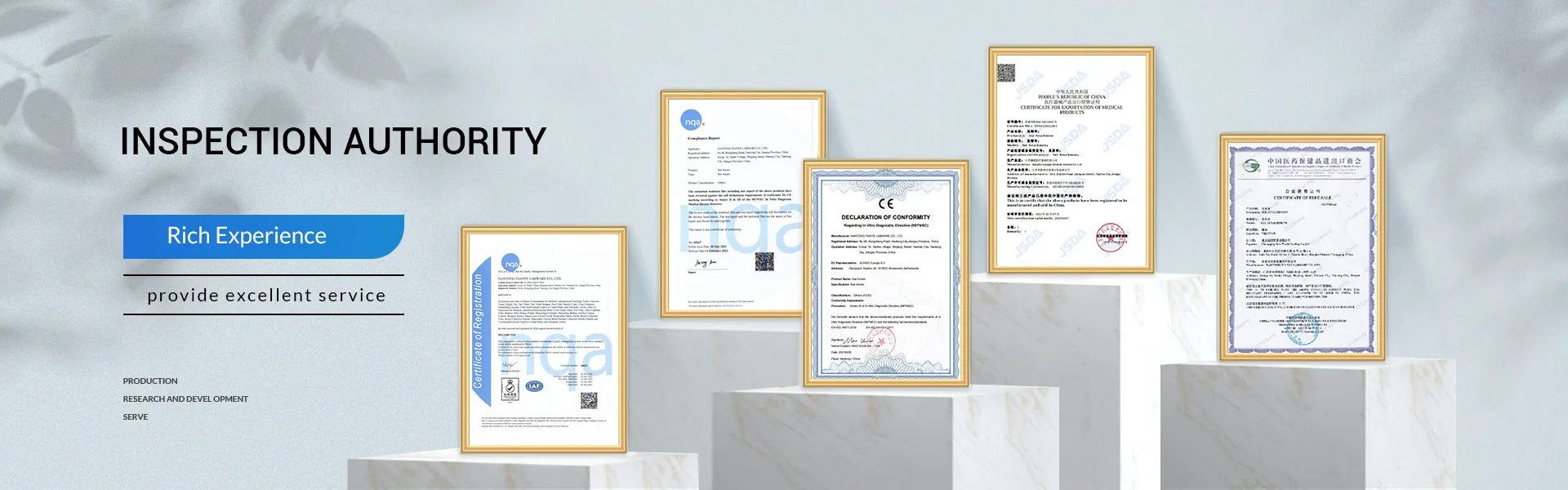
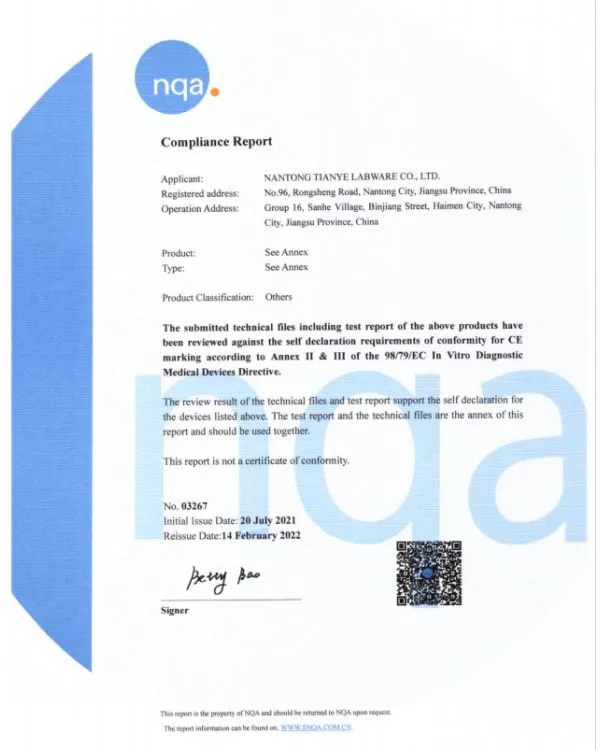
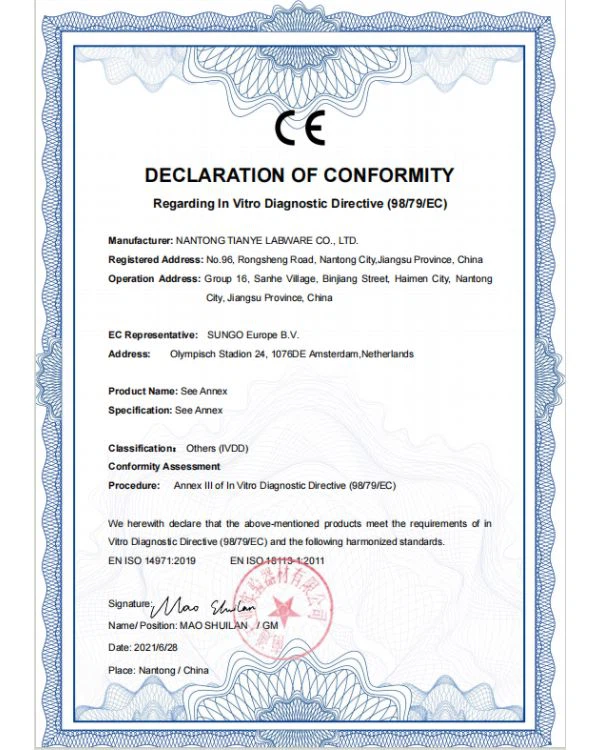
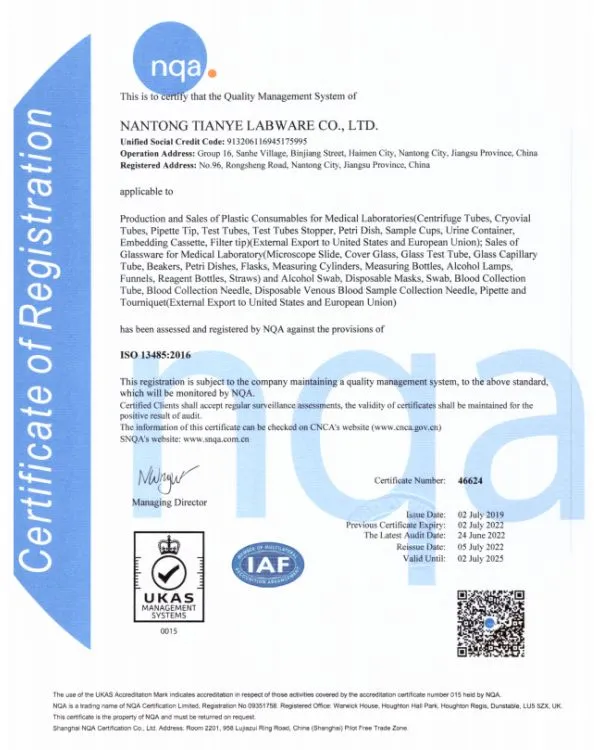
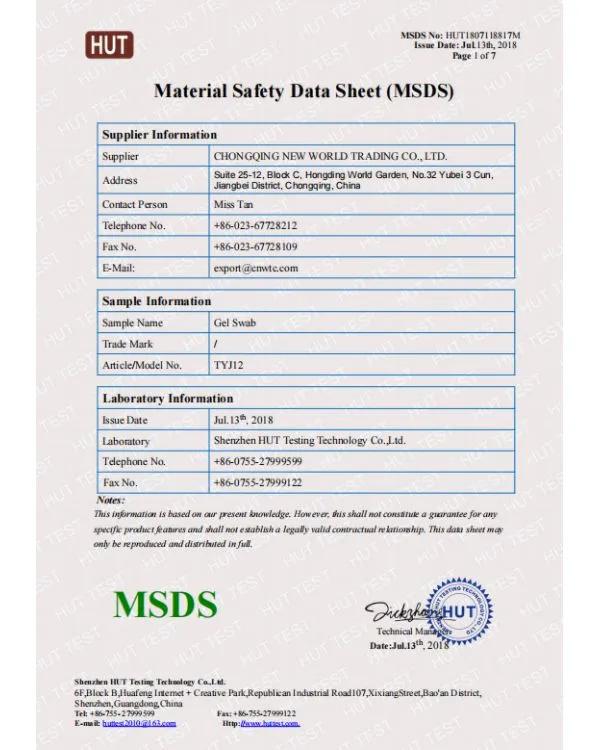
Our Certificate
FAQ
Q: What is a glass beaker?
Q: What are glass beakers made of?
Q: What are the advantages of using glass beakers?
Q: Can glass beakers be used for heating substances?
Q: Can glass beakers be used in a microwave?
Q: Can glass beakers be used in an oven?
Q: Can glass beakers be used for storing chemicals?
Q: Can glass beakers be used for measuring volume?
Q: How accurate are the volume measurements on glass beakers?
Q: Can glass beakers be used for mixing chemicals?
Q: Can glass beakers be used for titration?
Q: Can glass beakers be used for storing food or beverages?
Q: How should glass beakers be cleaned?
Q: Can glass beakers be autoclaved?
Q: Can glass beakers be used with corrosive chemicals?
Q: Can glass beakers be used with flammable substances?
Q: Can glass beakers be used with strong acids or bases?
Q: Can glass beakers be used for measuring temperature?
Q: Can glass beakers be used for filtration?
Q: Can glass beakers be used for ultrasonic cleaning?
We're well-known as one of the leading glass beakers manufacturers in China. If you're going to buy cheap glass beakers in stock, welcome to get quotation and free sample from our factory. Good service and low price are available.
5000ml Aspirator Bottle