


Lab Condenser Tube
What Is Lab Condenser Tube
A Petri dish is a circular, flat dish made of glass or plastic that is commonly used in biology and microbiology laboratories. Petri dishes are used to culture cells or bacteria and observe their growth over a period of time. The bottom of the dish is coated with agar, which provides nutrients and a solid surface for the cells or bacteria to grow on. Samples are added to the agar, and the Petri dish is then sealed and incubated at a specific temperature until the cells or bacteria have grown sufficiently. Petri dishes are an essential tool in medical and scientific research, allowing scientists to study microorganisms and develop new treatments and therapies.
Advantages of Lab Condenser Tube
Ease of use
Lab condenser tubes are designed for simplicity and ease of use. They are typically made of glass or plastic and are easy to handle and clean. The tubes have screw caps that allow for secure closure, preventing leakage or spillage.
Versatility
Lab condenser tubes are highly versatile, suitable for a variety of applications. They can be used for distillation, condensation, and evaporation processes. The tubes can be connected to various other laboratory equipment, such as condensers, stills, and separators, to perform a range of experiments or industrial processes.
Temperature control
Lab condenser tubes allow for precise temperature control. They can be placed in hot water baths or connected to temperature-controlled heat sources to maintain the desired temperature during experiments or industrial processes. This ensures that the condensation or evaporation process occurs at the desired temperature, enhancing experimental reproducibility and accuracy.
Precision and accuracy
Lab condenser tubes provide precise and accurate results. The glass or plastic material used in their construction ensures that the tube is free from impurities or contaminants that could affect the purity of the product. This makes them suitable for use in experiments where precision and accuracy are crucial, such as analytical chemistry or biochemistry experiments.
Durability and longevity
Lab condenser tubes are durable and long-lasting. Glass tubes, in particular, can withstand repeated use and cleaning, making them suitable for long-term use in the laboratory. Plastic tubes are also sturdy and resist damage, providing a reliable performance over time.
Cost-effectiveness
Lab condenser tubes are relatively cost-effective compared to other laboratory equipment. Glass tubes can be reused numerous times, reducing the overall cost per experiment. Plastic tubes are also relatively inexpensive and can be discarded after use, depending on the specific requirements of the experiment or process.
-
![Boro 3.3 Glass Liebig Glass Condenser with Fused Inner Tube]() Boro 3.3 Glass Liebig Glass Condenser with Fused Inner TubeBoro 3.3 Glass Condenser with a fused inner tube is a crucial laboratory apparatus designed for efficient heat exchange and condensation during chemical processes. Condenser With fused inner tube...read more
Boro 3.3 Glass Liebig Glass Condenser with Fused Inner TubeBoro 3.3 Glass Condenser with a fused inner tube is a crucial laboratory apparatus designed for efficient heat exchange and condensation during chemical processes. Condenser With fused inner tube...read more -
![Lab Glass Allihn Condenser with Bulbed Inner Tube]() Lab Glass Allihn Condenser with Bulbed Inner TubeAllihn Condenser With Bulbed Inner Tube is a specialized laboratory apparatus for efficient cooling and condensation during chemical processes. Its distinctive design, featuring a bulbed inner...read more
Lab Glass Allihn Condenser with Bulbed Inner TubeAllihn Condenser With Bulbed Inner Tube is a specialized laboratory apparatus for efficient cooling and condensation during chemical processes. Its distinctive design, featuring a bulbed inner...read more -
![Graham Boro 3.3 Glass Condenser Tubes with Coiled Inner Tube]() Graham Boro 3.3 Glass Condenser Tubes with Coiled Inner TubeGraham Boro 3.3 Class condenser is used for pressure distillation or making oil essences. Made of thick piece of 3.3 borosilicate glass,durable, you will be surprised of the quality.read more
Graham Boro 3.3 Glass Condenser Tubes with Coiled Inner TubeGraham Boro 3.3 Class condenser is used for pressure distillation or making oil essences. Made of thick piece of 3.3 borosilicate glass,durable, you will be surprised of the quality.read more


Why Choose Us
Advanced equipment
A machine, tool or instrument designed with advanced technology and functionality to perform highly specific tasks with greater precision, efficiency and reliability.
High quality
Our products are manufactured or executed to a very high standard, using the finest materials and manufacturing processes.
Professional team
Our professional team collaborates and communicates effectively with each other, and is dedicated to delivering high quality results. We are capable of handling complex challenges and projects that require our specialized expertise and experience.
Quality control
We have built a professional quality control team to accurately inspect every raw material and every production process.
Customized services
We understand that each customer has unique manufacturing needs. That’s why we offer customization options to cater to your specific requirements.
24H online service
We try and respond to all concerns within 24 hours and our teams are always at your disposal in case of any emergencies.
Types of Lab Condenser Tube
Water-cooled condenser tubes
Water-cooled condenser tubes are the most commonly used type of condenser tube in laboratories. They consist of a series of copper or stainless steel tubes that are cooled by circulating water through the tubes. The tubes are typically arranged in a coil shape, and the vapor to be condensed passes over the tubes. The circulating water helps to cool the tubes and condense the vapor into a liquid.
Air-cooled condenser tubes
Air-cooled condenser tubes are similar to water-cooled condenser tubes, but instead of using water, they use air to cool the tubes. The tubes are typically arranged in a finned configuration to increase the surface area for cooling. Air is forced over the tubes, which helps to cool the vapor and condense it into a liquid.
Shell and tube condenser tubes
Shell and tube condenser tubes are a type of condenser tube that consists of a shell surrounding a series of tubes. The vapor to be condensed passes through the tubes, while the cooling medium, such as water or air, circulates through the shell. The shell and tube design helps to increase the surface area for cooling and provides more flexibility in terms of the type of cooling medium that can be used.
Wound tube condenser tubes
Wound tube condenser tubes are a type of condenser tube that consists of a coiled tube wound around a central mandrel. The coiled design provides a large surface area for cooling, and the tubes are typically made of copper or stainless steel. Wound tube condenser tubes are often used in high-pressure applications where the vapor to be condensed is at high temperatures.
Spiral tube condenser tubes
Spiral tube condenser tubes are a type of condenser tube that consists of a spiral-shaped tube. The tube is typically made of copper or stainless steel and has a large surface area for cooling. The spiral shape helps to increase the surface area and provides more flexibility in terms of the type of cooling medium that can be used.
Clean the tube
Before storing the condenser tube, it's essential to clean it thoroughly to remove any residue or debris that may have accumulated during use. Use laboratory-grade detergent and water to clean the tube, and rinse it thoroughly with water to remove any remaining detergent.
Dry the tube
After cleaning, it's crucial to dry the tube thoroughly to prevent the growth of mold or mildew. Use a clean, dry towel to dry the tube or air-dry it in a well-ventilated area.
Store in a dry place
Store the condenser tube in a dry place away from moisture and direct sunlight. Exposure to moisture can cause rusting or pitting of the tube, while exposure to sunlight can cause damage to the tube's material.
Use a protective cover
To prevent damage to the condenser tube during storage, use a protective cover or cap to cover the tube's end. This will prevent dust, dirt, or other debris from entering the tube and causing damage.
Label the tube
Always label the condenser tube with its size, material, and any other relevant information. This will help in quick identification and avoid confusion when using the tube for future experiments.
Avoid stacking
Never stack condenser tubes on top of each other, as this can cause damage to the tubes. Always store them separately to prevent any potential damage.
Inspect before use
Always inspect the condenser tube before use to ensure that it is clean and free of any residue or stains. Check for any signs of damage, such as cracks or leaks, and replace the tube if necessary.
Application of Lab Condenser Tube
Distillation
Lab condenser tubes are commonly used in distillation processes. Distillation is a method of separating mixtures of liquids with different boiling points, and it involves heating the mixture to boiling and then condensing the vapor back into a liquid. The lab condenser tube is used to cool the vapor back into a liquid, which can then be collected and separated from the original mixture.
Chemical analysis
Lab condenser tubes are also used in chemical analysis. They are used to cool and condense vapors produced during chemical reactions, allowing the reaction products to be collected and analyzed. This can provide valuable information about the composition and properties of the reaction products.
Environmental monitoring
Lab condenser tubes are used in environmental monitoring to collect air samples. They are used to cool and condense airborne particles and gases, which can then be analyzed to determine the types and concentrations of pollutants present in the air.
Pharmaceutical processing
Lab condenser tubes are used in pharmaceutical processing to cool and condense reaction mixtures. They are used in the production of many drugs, including antibiotics, hormones, and other pharmaceutical compounds. The lab condenser tube helps to ensure that the reaction products are pure and free from impurities.
Food processing
Lab condenser tubes are used in food processing to cool and condense liquids and gases. They are used in the production of many foods, including dairy products, beverages, and baked goods. The lab condenser tube helps to ensure that the food products are safe and free from contamination.
Precautions When Using Lab Condenser Tube
Wear appropriate personal protective equipment
Always wear appropriate ppe when handling lab condenser tubes, including gloves, goggles, and a lab coat. This can help protect you from exposure to harmful chemicals or potential injuries.
Handle with care
Lab condenser tubes can be fragile and easily broken if not handled carefully. Always handle the tube by its edges and avoid applying too much pressure or force.
Use proper technique
When using a lab condenser tube, always follow proper technique. Ensure that the tube is securely attached to the rest of the apparatus and that all connections are tight. Check for leaks regularly and address them promptly.
Keep the condenser cool
To function effectively, lab condenser tubes must remain cool. Always ensure that the cooling mechanism is operational and functioning correctly. If the condenser overheats, it could explode, causing injury or property damage.
Store properly
When not in use, store lab condenser tubes in a designated storage area away from heat sources or direct sunlight. Always keep the tubes upright to prevent damage or injury.
Dispose of waste properly
Always dispose of waste generated by lab condenser tubes according to local regulations and guidelines. Improper disposal can lead to environmental harm or health hazards.
Train properly
Before using a lab condenser tube, ensure that you have received proper training on its use and safety protocols. Never use equipment if you are not familiar with its operation or safety procedures.
Maintain the equipment
Regularly maintain and inspect lab condenser tubes to ensure that they are in good working condition. Check for any signs of damage or wear and replace any damaged or worn parts promptly.
Be aware of the surrounding
Always be aware of your surroundings when working with lab condenser tubes. Avoid distractions and keep an eye out for any potential hazards that could affect the safety of the experiment or those around you.
How to Install Lab Condenser Tube
Gather your materials
Before installing the lab condenser tube, gather all the necessary materials. You will need the condenser tube itself, a thermometer, a rubber hose, and a clamp to secure the hose. Also, have a designated workspace and ensure that you have received proper training on using the equipment safely.
Attach the thermometer
Attach the thermometer to the condenser tube. Typically, there will be a port on the side of the tube where you can insert the thermometer bulb. Make sure that the bulb is fully inserted into the port and that the thermometer is securely attached.
Connect the rubber hose
Take the rubber hose and connect it to the outlet port of the condenser tube. Ensure that the hose is securely connected to the tube and that there are no leaks.
Secure the hose
Use the clamp to secure the hose to the condenser tube. This will help prevent any leaks and ensure that the hose stays securely attached during the experiment.
Attach the condenser tube to the apparatus
Once the thermometer and hose are attached, you can attach the condenser tube to the rest of the laboratory apparatus. Ensure that all connections are tight and that there are no leaks.
Test the system
Before using the lab condenser tube in an experiment, test the system to ensure that it is working correctly. Check that the thermometer is reading accurately and that the hose and connections are secure.
Follow safety protocols
Always follow proper safety protocols when installing and using a lab condenser tube. Wear appropriate personal protective equipment (ppe), including gloves, goggles, and a lab coat, and work in a well-ventilated area.
Regular maintenance
Regularly inspect and maintain the lab condenser tube to ensure that it is in good working condition. Check for any signs of damage or wear and replace any damaged or worn parts promptly.
Material compatibility
The first thing to consider when selecting a lab condenser tube is the material compatibility. Different materials require different types of condenser tubes. For example, glass condenser tubes are commonly used with corrosive chemicals, while metal condenser tubes are used with heat-resistant materials. It is essential to choose a lab condenser tube compatible with the material you will be working with to prevent any potential damage or harm.
Size and shape
The size and shape of the lab condenser tube will depend on your application's requirements. Some condenser tubes are designed for specific applications, such as distillation or chemical analysis. It is essential to choose the right size and shape of the lab condenser tube to ensure optimal performance and accurate results.
Safety considerations
Safety is a crucial factor to consider when selecting a lab condenser tube. Always consult material safety data sheets (msds) and follow proper protocols when working with corrosive chemicals. If you are working with hazardous materials, it is essential to choose a lab condenser tube that meets safety standards and regulations.
Quality and durability
The quality and durability of the lab condenser tube are essential factors to consider. A high-quality and durable lab condenser tube will provide many years of reliable service and accurate results. It is essential to choose a lab condenser tube that meets industry standards and regulations to ensure optimal performance and safety.
Cost and budget
The cost and budget of the lab condenser tube are also essential factors to consider. It is essential to choose a lab condenser tube that fits within your budget without compromising quality and performance. However, it is crucial to remember that the cheapest option may not always be the best option in the long run.
What Are Lab Condenser Tubes Made Of?
Lab condenser tubes are an essential component in many laboratory experiments and industrial processes. They are used to cool and condense vapor into a liquid form. The material used to make lab condenser tubes depends on the specific application and requirements of the process. Glass is a common material used for lab condenser tubes due to its transparency, which allows for easy visualization of the condensation process. Glass tubes are also non-reactive and do not leach chemicals into the sample. However, glass tubes are fragile and can break easily, which may limit their use in certain applications. Stainless steel is a popular material used for lab condenser tubes due to its durability, resistance to corrosion, and ability to withstand high temperatures. Stainless steel tubes are ideal for applications that require frequent use and exposure to harsh chemicals. They are also more expensive than other materials but offer a longer lifespan. Copper is another material used for lab condenser tubes due to its high thermal conductivity, which allows for efficient cooling of the vapor. Copper tubes are also resistant to corrosion and can withstand high temperatures. However, copper can react with certain chemicals, which may limit its use in certain applications. Aluminum is a lightweight and inexpensive material used for lab condenser tubes. It has good thermal conductivity and can withstand moderate temperatures. However, aluminum is less durable than stainless steel and can corrode easily when exposed to moisture or certain chemicals.

How Does a Lab Condenser Tube Work?
A lab condenser tube is a crucial piece of laboratory equipment that is used to cool and condense vapors into liquid form. It is commonly used in distillation, reflux, and other laboratory applications that require the condensation of vapor. The vapor to be condensed enters the condenser tube through an inlet port. The vapor flows through the tube, which is filled with a coolant, such as water or air. The coolant in the condenser tube absorbs the heat from the vapor, causing it to condense back into its liquid form. The coolant flows through the tube in the opposite direction to the vapor, which helps to increase the surface area for heat exchange. The condensate flows out of the condenser tube through an outlet port. The condensate is collected in a container for further analysis or disposal. Regular cleaning and maintenance of the lab condenser tube are crucial to ensure optimal performance and safety. The tube should be rinsed with water after each use and cleaned with a mild detergent to remove any residue. It's also important to check the coolant supply and replace it as needed. When using a lab condenser tube, it's essential to follow proper safety precautions to prevent potential hazards. Always wear appropriate personal protective equipment, such as gloves, goggles, and a lab coat, and work in a well-ventilated area. Avoid skin and eye contact with the coolant or condensate, and follow proper waste disposal procedures.
Can Lab Condenser Tubes Be Used with Corrosive Chemicals?
Lab condenser tubes are an essential piece of laboratory equipment used in many scientific procedures, including distillation, reflux, and crystallization. However, when it comes to using corrosive chemicals, it's crucial to choose the right type of condenser tube that can withstand the corrosive nature of the chemicals. Corrosive chemicals can react with the material of the lab condenser tube, causing damage and potentially leading to safety hazards. It's crucial to choose a condenser tube made of materials that are compatible with the corrosive chemicals being used. Materials such as glass, stainless steel, and certain plastics are generally safe and non-reactive with corrosive chemicals. The design of the lab condenser tube is also important when working with corrosive chemicals. Condenser tubes with a simple design and smooth interior surface are less likely to trap corrosive chemicals and cause damage. Condenser tubes with complex designs or rough surfaces may trap corrosive chemicals and cause damage over time. When working with corrosive chemicals, it's essential to follow proper use and handling procedures to prevent potential hazards. Always wear appropriate personal protective equipment, such as gloves, goggles, and a lab coat, and work in a well-ventilated area. Avoid skin and eye contact with the corrosive chemicals, and follow proper waste disposal procedures. Regular cleaning and maintenance of the lab condenser tube are crucial when working with corrosive chemicals to prevent damage and ensure safety. The tube should be rinsed with water after each use and cleaned with a mild detergent to remove any residue. It's also important to check the coolant supply and replace it as needed. When using lab condenser tubes with corrosive chemicals, it's essential to follow proper safety precautions to prevent potential hazards.

Lab condenser tubes are an essential piece of laboratory equipment used in many scientific procedures, including distillation, reflux, and crystallization. Fractional distillation is a specific type of distillation process used to separate a mixture of two or more liquids, each with different boiling points. Fractional distillation is based on the principle that different liquids have different boiling points. When a mixture of two or more liquids is heated, the liquid with the lowest boiling point will vaporize first, and the vapor can be condensed back into its liquid form using a lab condenser tube. The liquid with the higher boiling point remains in the original liquid mixture. The lab condenser tube plays a crucial role in the fractional distillation process by condensing the vapor back into its liquid form. The condenser tube is a long, coiled tube filled with a coolant, such as water or air, that helps to absorb the heat from the vapor and transfer it to the coolant. The coolant flows through the tube in the opposite direction to the vapor, which helps to increase the surface area for heat exchange and increase the efficiency of the condensation process. The lab condenser tube used for fractional distillation should be made of materials compatible with the liquids being distilled. Materials such as glass, stainless steel, and certain plastics are generally safe and non-reactive with most liquids. The design of the lab condenser tube is also important for efficient fractional distillation. Condenser tubes with a large surface area and a high coolant flow rate will generally provide more efficient condensation. It's also important to ensure that the condenser tube is properly cleaned and maintained to prevent residue buildup and ensure optimal performance. When using lab condenser tubes for fractional distillation, it's essential to follow proper safety precautions to prevent potential hazards. Always wear appropriate personal protective equipment, such as gloves, goggles, and a lab coat, and work in a well-ventilated area. Avoid skin and eye contact with the liquids being distilled, and follow proper waste disposal procedures.
Our factory
Hongqing New Way Trading Co., Limited located Chongqing, in the south west of China. Neway is a Modern Enterprise which specialized in developing, manufacturing and marketing of lab glasswares, plastic disposables and medical consumables, which has a complete independent research and industrial line.With perfect organization and advanced management, Neway has one professional work team which engaged in the products development and production control. We have already established relationship for product development cooperation with a number of well known domestic and foreign companies. Our main products include medical consumables, laboratory plastic consumables and glass products. We have more than three hundred products, such as blood collection tube, blood lancets, bandages, female swabs, centrifuge tube, test tube, pipette tip, petri dish, cuvettes, glass slide, glass beakers and others, all the products can do OEM as customer required.


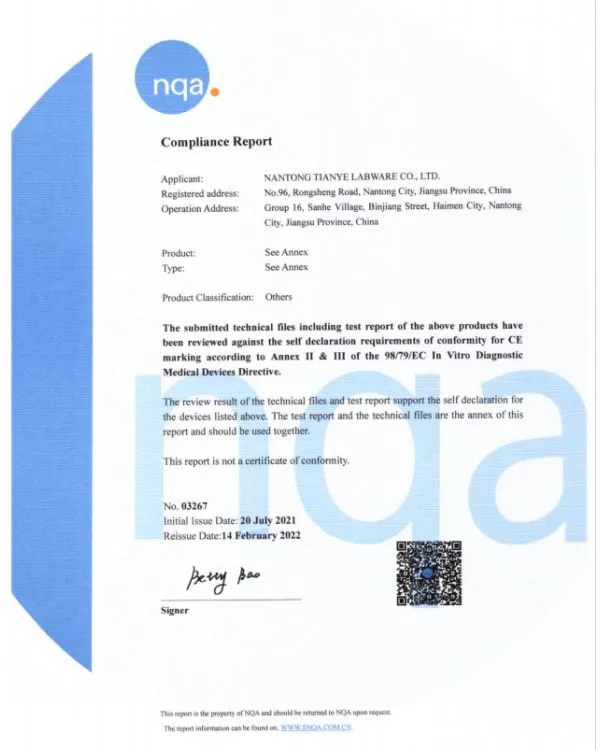
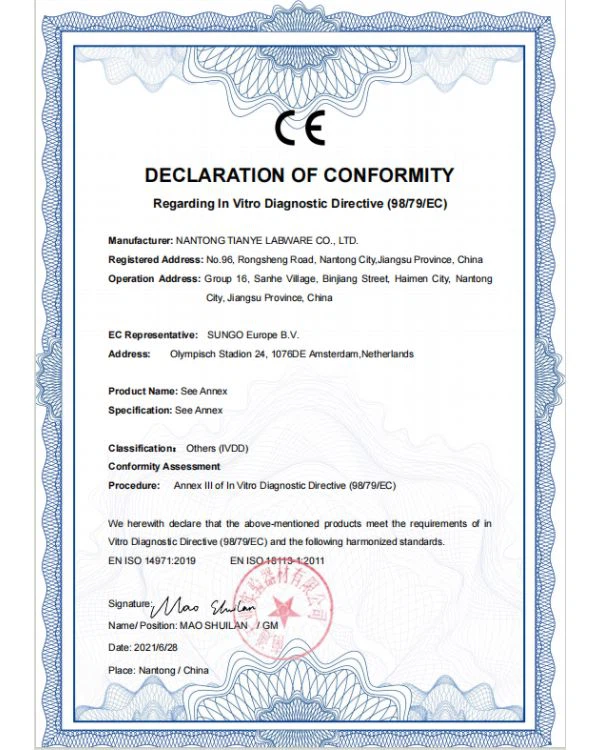
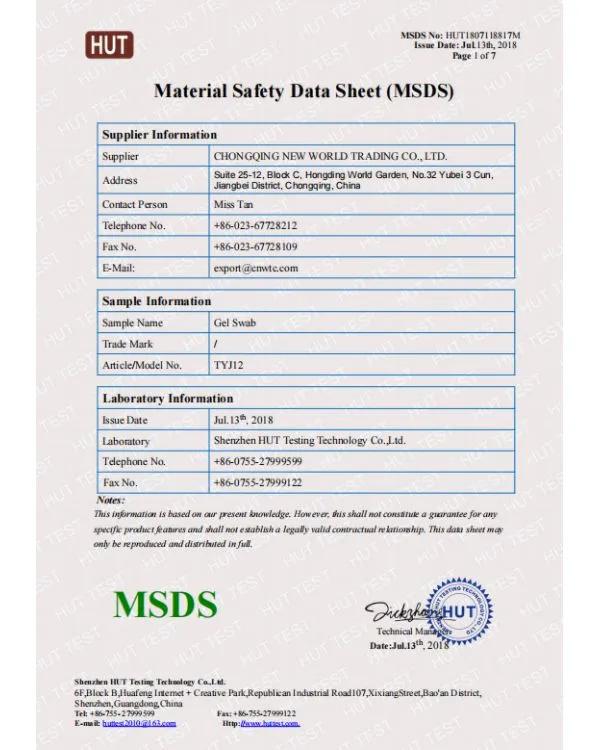
Our Certificate

FAQ
Q: What are lab condenser tubes made of?
Q: What are the different types of lab condenser tubes?
Q: What is the purpose of a lab condenser tube?
Q: How does a lab condenser tube work?
Q: What are the applications of lab condenser tubes?
Q: Can lab condenser tubes be used with corrosive chemicals?
Q: Can lab condenser tubes be used with high-temperature substances?
Q: Can lab condenser tubes be used for vacuum applications?
Q: Can lab condenser tubes be used for fractional distillation?
Q: Can lab condenser tubes be used for refluxing?
Q: Can lab condenser tubes be used for water distillation?
Q: Can lab condenser tubes be used for essential oil extraction?
Q: Can lab condenser tubes be used for cryogenic applications?
Q: Can lab condenser tubes be used for cooling reaction vessels?
Q: Can lab condenser tubes be used for gel electrophoresis?
Q: Can lab condenser tubes be used for chromatography?
Q: Can lab condenser tubes be used for gas scrubbing?
Q: Can lab condenser tubes be used for water cooling in aquariums?
Q: Can lab condenser tubes be used for cooling distillation columns?
Q: Can lab condenser tubes be used for cooling hot gases in industrial processes?
We're well-known as one of the leading lab condenser tube manufacturers in China. If you're going to buy cheap lab condenser tube in stock, welcome to get quotation and free sample from our factory. Good service and low price are available.
Glass Allihn Condenser, Boro 3 3 Class condenser, Lab Allihn Condenser