

Hey there, fellow lab enthusiasts! I'm a supplier of gravity bottles, and today I want to dive into an interesting question: Can a gravity bottle be used in a centrifuge?
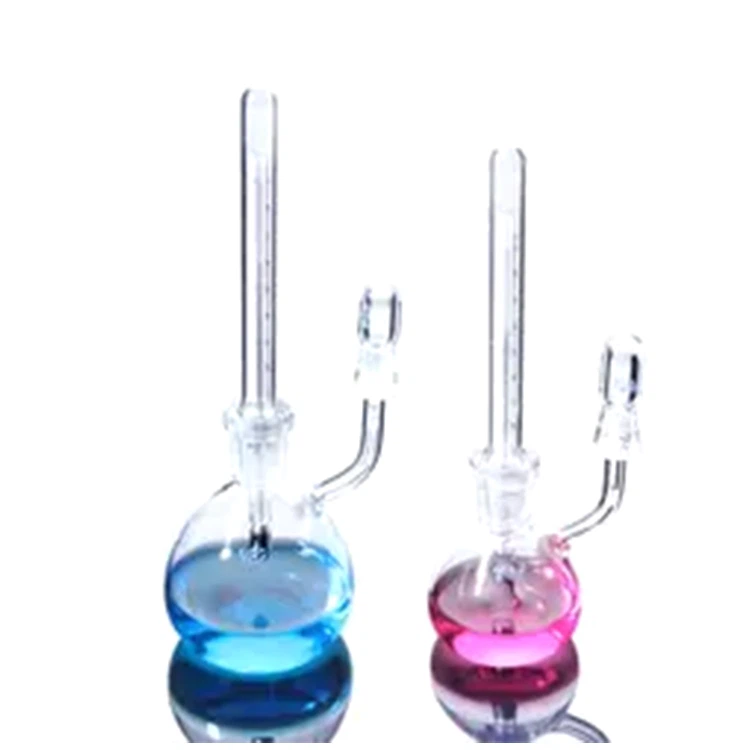
First off, let's quickly talk about what a gravity bottle is. A gravity bottle, also known as a pycnometer, is a piece of laboratory equipment used to measure the specific gravity of liquids or solids. It's basically a small, precisely calibrated bottle that helps scientists and researchers figure out the density of different substances. We offer a wide range of gravity bottles, like the Laboratory Glass 250ml 90mm Le Chatelier Chemical Specific Gravity Bottle, the Lab Glass Gay Lussac 5ml 10ml 25ml 50ml Pycnometer Specific Gravity Bottle, and the High Borosilicate Glass Laboratory Pycnometer Specific Gravity Bottle with Thermometer. These bottles come in different sizes and designs to suit various lab needs.
Now, onto the main question. The idea of using a gravity bottle in a centrifuge might seem a bit odd at first, but it's actually a question that's been asked a few times. A centrifuge is a machine that spins really fast to separate substances of different densities. It's commonly used in labs to separate components in a liquid mixture, like separating blood cells from plasma.
Let's consider the pros and cons of using a gravity bottle in a centrifuge.
Advantages
- Enhanced Separation: One potential advantage is that the centrifuge can speed up the separation process. In a normal gravity bottle setup, the separation of substances depends on gravity, which can be relatively slow. The high - speed rotation in a centrifuge can cause the components to separate much faster. For example, if you're trying to separate a mixture of two liquids with different densities in a gravity bottle, the centrifuge can make the separation happen in a matter of minutes instead of hours.
- Testing in Extreme Conditions: A centrifuge can create high - g forces that simulate extreme conditions. This can be useful for testing how substances behave under high - stress situations. If you're using a gravity bottle to study the properties of a new material or a chemical compound, the centrifuge can provide additional data on how the substance reacts to these extreme forces.
Disadvantages
- Risk of Breakage: Gravity bottles are usually made of glass, which is fragile. The high - speed rotation in a centrifuge can create a lot of stress on the bottle. If the bottle isn't properly fixed or if the forces are too strong, there's a high risk of the bottle breaking. A broken bottle not only means the loss of the sample but can also be dangerous as shattered glass can cause injuries.
- Calibration Issues: Gravity bottles are carefully calibrated to measure specific gravity accurately under normal conditions. When you put a gravity bottle in a centrifuge, the forces acting on the bottle and the substance inside it change. This can potentially affect the accuracy of the specific gravity measurement. The calibration that was done for normal gravitational conditions might not be valid when the bottle is spinning in a centrifuge.
- Sealing Problems: To work properly in a centrifuge, the gravity bottle needs to be well - sealed. If the seal isn't tight, the liquid inside can leak out during the high - speed rotation. This can not only mess up your experiment but also damage the centrifuge.
Compatibility
Whether a gravity bottle can be used in a centrifuge also depends on its design and the type of centrifuge. Some centrifuge models have specific requirements for the containers they can accommodate. For example, the size and shape of the gravity bottle need to fit properly in the centrifuge's rotor. If the bottle is too big or too small, it might not be able to rotate safely.
Another important factor is the material of the gravity bottle. As I mentioned earlier, most gravity bottles are made of glass. However, some centrifuges are designed to work with plastic containers. If you try to use a glass gravity bottle in a centrifuge that's only compatible with plastic, it won't work and could even be dangerous.

Safety Precautions
If you decide to try using a gravity bottle in a centrifuge, there are some safety precautions you need to take.
- Check the Bottle: Before putting the gravity bottle in the centrifuge, inspect it carefully for any cracks or defects. A damaged bottle is more likely to break during the centrifugation process.
- Balance the Load: It's crucial to balance the centrifuge properly. This means that if you're using a gravity bottle, you need to place a similar weight or another gravity bottle on the opposite side of the rotor. An unbalanced centrifuge can cause vibrations that can damage the machine and increase the risk of the bottle breaking.
- Use Protective Gear: Wear safety goggles and gloves when operating the centrifuge. In case the bottle breaks, the protective gear will help prevent injuries from shattered glass and chemical splashes.
Conclusion
So, can a gravity bottle be used in a centrifuge? The answer is it's possible, but it's not without its challenges. There are some potential benefits in terms of speed and the ability to test under extreme conditions. However, there are also significant risks, such as breakage, calibration issues, and sealing problems.
If you're interested in exploring this further or if you're in the market for high - quality gravity bottles for your lab, don't hesitate to reach out. We'd be more than happy to discuss your specific needs and provide you with the best products for your experiments.
References
- "Principles of Centrifugation," Laboratory Equipment Handbook
- "Specific Gravity Measurement Techniques," Journal of Analytical Chemistry