

Hey there! As a volumetric flask supplier, I often get asked a bunch of questions about the uses and limitations of these nifty lab tools. One question that's been popping up quite a bit lately is, "Can a volumetric flask be used for measuring solutions with a high metal ion content?" Well, let's dive right in and explore this topic.
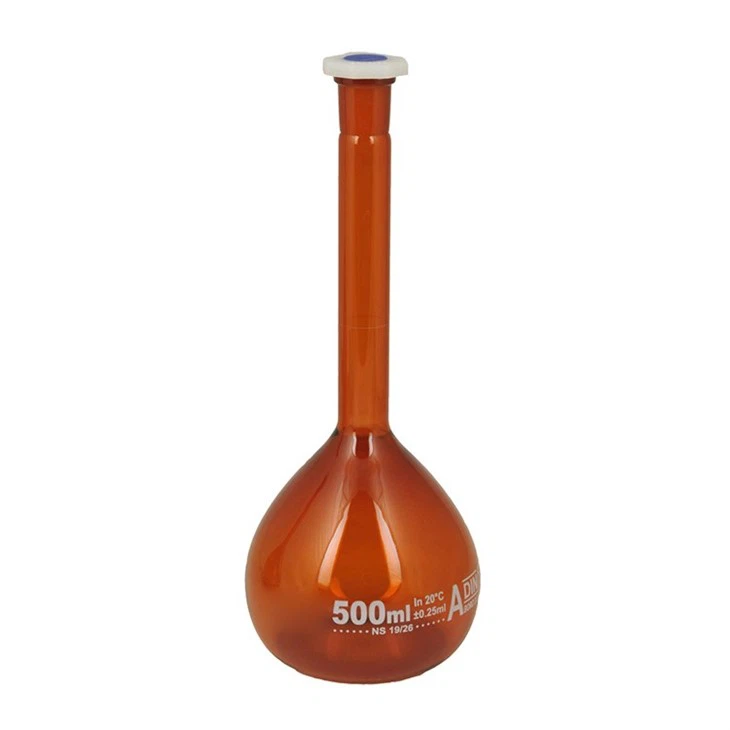
First off, let's talk a bit about what a volumetric flask is. If you're new to the lab scene, a volumetric flask is a piece of glassware designed to hold a very precise volume of liquid at a specific temperature. They come in all sorts of sizes, from tiny ones to some real whoppers. For example, we've got the Lab 5ml 25ml 50ml Amber Glass Volumetric Flask with Stopper for when you need to measure small amounts, and then there are the Laboratory Large Graduated 1000ml 2000ml Glass Volumetric Flasks with Plastic Or Glass Stopper for larger volumes.
Now, back to the question at hand: using volumetric flasks for solutions with high metal ion content. The short answer is, it depends. Volumetric flasks are typically made of glass, and glass is generally pretty resistant to a lot of chemicals. But when it comes to metal ions, things can get a bit tricky.
Some metal ions can react with the glass over time. For instance, certain alkaline metal ions like sodium and potassium can slowly leach into the glass and cause it to deteriorate. This might not happen overnight, but if you're constantly using the flask to measure solutions with high concentrations of these ions, you could start to see some issues. The glass might become etched or develop a cloudy appearance, which can affect the accuracy of your measurements.
On the other hand, not all metal ions are bad news. Some metal ions, like those of noble metals such as gold and platinum, are relatively inert and are less likely to react with the glass. So, if you're dealing with solutions containing these types of metal ions, you're probably in the clear.
Another factor to consider is the pH of the solution. Metal ions can behave differently depending on whether the solution is acidic or basic. In acidic solutions, some metal ions might form complexes that are more likely to interact with the glass. For example, in a highly acidic solution with a high concentration of iron ions, the iron might react with the silica in the glass, causing corrosion.
So, what can you do if you need to measure solutions with high metal ion content? Well, one option is to use a special type of glass that's more resistant to chemical attack. Borosilicate glass, for example, is known for its excellent chemical resistance and thermal stability. Most of our volumetric flasks are made from high - quality borosilicate glass, which gives you an extra layer of protection.
You can also take some precautions when using the flasks. Make sure to clean the flask thoroughly after each use. Use appropriate cleaning agents that won't leave any residues that could react with the metal ions in subsequent measurements. And if you notice any signs of damage or corrosion on the flask, it's best to retire it and get a new one.
It's also a good idea to do some preliminary tests. Before using the flask for a large - scale experiment or production process, try measuring a small amount of the solution in the flask and observe if there are any visible changes over a period of time. This can give you an idea of how the flask will hold up.
In some cases, you might even want to consider using alternative materials. There are plastic volumetric flasks available, which can be a good option for certain applications. However, plastic has its own set of limitations. It might not be as accurate as glass for very precise measurements, and some plastics can absorb certain chemicals, including metal ions.
So, to sum it up, a volumetric flask can be used for measuring solutions with high metal ion content, but you need to be aware of the potential risks and take appropriate measures. If you're unsure, it's always a good idea to consult with a chemist or an expert in the field.
As a volumetric flask supplier, we're here to help you make the right choice. We've got a wide range of flasks to suit different needs, and we can provide you with all the information you need to ensure that you're using the flasks safely and effectively. If you're interested in purchasing our volumetric flasks or have any questions about their use, don't hesitate to get in touch. We're happy to discuss your requirements and help you find the best solution for your lab.
In conclusion, while there are challenges when using volumetric flasks for solutions with high metal ion content, with the right knowledge and precautions, you can still get accurate and reliable measurements. So, go ahead and explore the possibilities, and if you need any support, we're just a message away.

References
- Textbooks on analytical chemistry
- Journals on glass science and technology
- Technical data sheets from glassware manufacturers