

Hey there, fellow boating enthusiasts! I'm a supplier of Gravity Bottles, and today I'm super stoked to share with you how these nifty little gadgets work on a boat. Whether you're a seasoned sailor or just getting into the boating scene, understanding the ins and outs of a Gravity Bottle can be a game-changer.
So, what exactly is a Gravity Bottle? Well, it's a specialized piece of equipment used to measure the specific gravity of liquids. In the boating world, this is crucial for a bunch of reasons. For instance, it helps us figure out the density of seawater, which can vary depending on factors like temperature, salinity, and location. This info is super important for things like adjusting the ballast of your boat, ensuring proper buoyancy, and even for some scientific research on the water.
Let's dive into how a Gravity Bottle works on a boat. First off, you've got to choose the right one for the job. We offer a wide range of Gravity Bottles, like the Laboratory Glass 250ml 90mm Le Chatelier Chemical Specific Gravity Bottle, the High Borosilicate Glass Laboratory Pycnometer Specific Gravity Bottle with Thermometer, and the Lab Glass Gay Lussac 5ml 10ml 25ml 50ml Pycnometer Specific Gravity Bottle. Each one has its own unique features and is designed for different applications.
Once you've got your Gravity Bottle, the first step is to clean it thoroughly. You don't want any dirt, debris, or old liquid residue messing up your measurements. Just use some mild detergent and water, rinse it well, and let it dry completely.
Next, you'll need to take a sample of the liquid you want to measure. On a boat, this is usually seawater, but it could also be fuel, coolant, or any other liquid you're interested in. To take the sample, carefully lower the Gravity Bottle into the water, making sure it's fully submerged. Then, slowly lift it out, being careful not to spill any of the liquid.

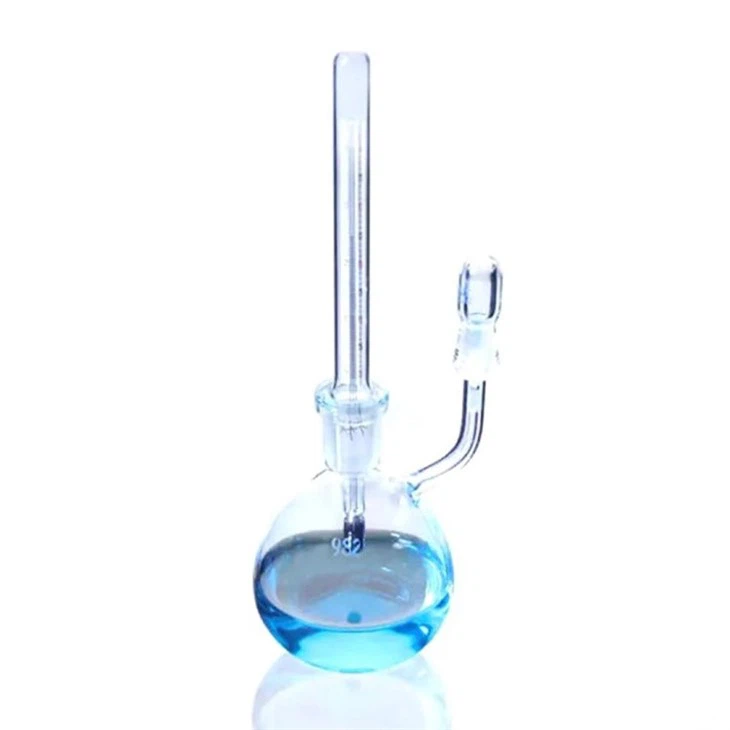
Now, it's time to measure the mass of the filled Gravity Bottle. You'll need a precision scale for this. Place the filled bottle on the scale and record the mass. Make sure to note down the temperature of the liquid as well, because the specific gravity of a liquid can change with temperature.
After you've measured the mass of the filled bottle, you'll need to empty it and refill it with a reference liquid, usually distilled water. The specific gravity of distilled water is well-known and can be used as a baseline for your measurements. Repeat the process of measuring the mass of the filled bottle with the reference liquid.
Once you've got the masses of the filled bottle with both the sample liquid and the reference liquid, you can calculate the specific gravity of the sample liquid. The formula for specific gravity is pretty simple: Specific Gravity = (Mass of Sample Liquid) / (Mass of Reference Liquid).
Let's say you measured the mass of the filled Gravity Bottle with seawater and got 300 grams, and the mass of the filled bottle with distilled water was 250 grams. Using the formula, the specific gravity of the seawater would be 300 / 250 = 1.2. This tells you that the seawater is 1.2 times denser than distilled water.
But why is this information so important on a boat? Well, as I mentioned earlier, the specific gravity of seawater can affect the buoyancy of your boat. If the seawater is denser, your boat will float higher in the water. On the other hand, if the seawater is less dense, your boat will sit lower in the water. By knowing the specific gravity of the seawater, you can adjust the ballast of your boat to ensure it's sitting at the right level in the water.
Another reason why specific gravity measurements are important on a boat is for fuel management. Different types of fuel have different specific gravities, and knowing the specific gravity of the fuel you're using can help you calculate how much fuel you have left in your tanks. This is especially important for long trips on the water, where you need to make sure you have enough fuel to get you to your destination.
In addition to these practical applications, specific gravity measurements can also be used for scientific research on the water. For example, marine biologists might use specific gravity measurements to study the density of seawater in different areas, which can affect the distribution of marine life. Oceanographers might use specific gravity measurements to study the movement of ocean currents and the mixing of different water masses.
So, there you have it! That's how a Gravity Bottle works on a boat. It's a simple but powerful tool that can provide you with valuable information about the liquids you're working with on the water. Whether you're a professional sailor, a hobbyist boater, or a scientist, having a Gravity Bottle on board can be a great asset.
If you're interested in purchasing a Gravity Bottle for your boat, or if you have any questions about how they work, please don't hesitate to reach out. We're here to help you find the right Gravity Bottle for your needs and to provide you with all the support you need to use it effectively.
References
- Principles of Naval Architecture, various editions
- Marine Engineering Handbook, various editions
- Textbooks on Fluid Mechanics and Thermodynamics