

A centrifuge is a common piece of laboratory equipment that uses centrifugal force to separate substances of different densities. The gravity bottle, on the other hand, is a precision instrument used to determine the specific gravity of liquids. When these two are combined, they can provide valuable insights in various scientific and industrial applications. As a supplier of high - quality gravity bottles, I'm excited to delve into how a gravity bottle works in a centrifuge.
Understanding the Basics of a Gravity Bottle
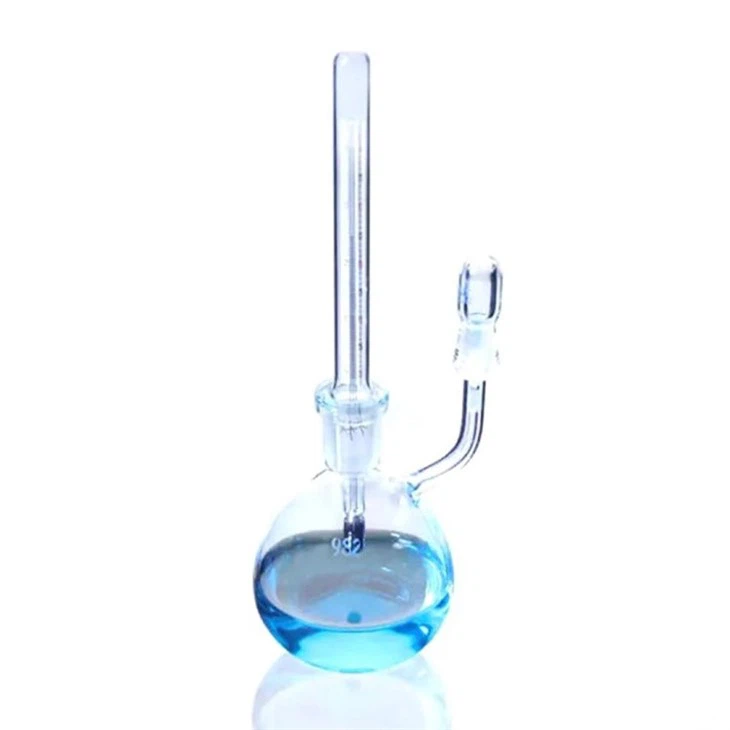
Before we explore its function in a centrifuge, let's understand what a gravity bottle is. A gravity bottle, also known as a pycnometer, is designed to hold a specific volume of liquid at a particular temperature. It is usually made of high - quality glass, such as high borosilicate glass, which offers excellent chemical resistance and thermal stability.
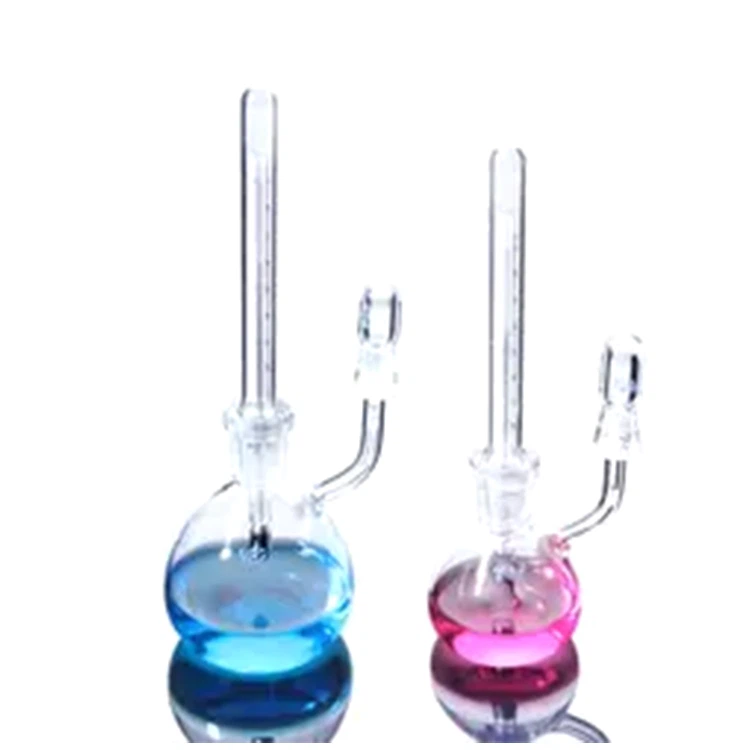
We offer a range of gravity bottles to meet different laboratory needs. For example, our High Borosilicate Glass Laboratory Pycnometer Specific Gravity Bottle with Thermometer comes with a built - in thermometer, allowing for accurate temperature measurement during specific gravity determination. The Laboratory Glass 250ml 90mm Le Chatelier Chemical Specific Gravity Bottle is a larger - capacity option, suitable for experiments that require a greater volume of liquid. And our Lab Glass Gay Lussac 5ml 10ml 25ml 50ml Pycnometer Specific Gravity Bottle provides different volume choices, enabling researchers to select the most appropriate one for their specific applications.
The Principle of a Centrifuge
A centrifuge operates on the principle of centrifugal force. When a centrifuge spins at high speeds, it creates a force that acts outward from the center of rotation. This force causes substances of different densities to separate. Denser substances move towards the outer edge of the centrifuge tube, while less dense substances remain closer to the center.
The separation process in a centrifuge is based on Stokes' law. According to this law, the sedimentation rate of a particle in a fluid is proportional to the difference in density between the particle and the fluid, the square of the particle's radius, and the centrifugal force acting on it. In a centrifuge, the higher the rotational speed, the greater the centrifugal force and the faster the separation process.
How a Gravity Bottle Works in a Centrifuge
When a gravity bottle is placed in a centrifuge, several things happen. First, the liquid inside the gravity bottle is subjected to the centrifugal force. If the liquid contains suspended particles or has different components with varying densities, the centrifugal force will cause these components to separate.
For example, in a sample of a suspension, the solid particles will move towards the bottom of the gravity bottle due to their higher density. This separation is crucial in many applications, such as determining the purity of a liquid or analyzing the composition of a mixture.
The shape and design of the gravity bottle also play an important role in the centrifugation process. The narrow neck of the gravity bottle helps to prevent the separated layers from mixing back together during the centrifugation and subsequent handling. The precise volume markings on the bottle allow for accurate measurement of the separated components.
Applications in Different Fields
Chemical Industry
In the chemical industry, the combination of a gravity bottle and a centrifuge is used for quality control and product development. For instance, when producing a chemical solution, the specific gravity of the solution can be determined using a gravity bottle after centrifugation. This helps to ensure that the solution has the correct composition and purity. If the specific gravity is outside the acceptable range, it may indicate the presence of impurities or an incorrect mixing ratio.
Pharmaceutical Industry
In the pharmaceutical industry, centrifugation with a gravity bottle is used to separate different components of a drug formulation. For example, in the production of injectable drugs, it is essential to remove any particulate matter from the solution. By using a centrifuge and a gravity bottle, the particulate matter can be separated from the drug solution, and the specific gravity of the purified solution can be measured to ensure its quality.
Environmental Science
In environmental science, the technique is used to analyze water samples. Water samples may contain suspended solids, dissolved salts, and other contaminants. By centrifuging the water sample in a gravity bottle, the suspended solids can be separated from the water, and the specific gravity of the remaining water can be measured. This information can be used to assess the quality of the water and to monitor environmental pollution.
Advantages of Using Our Gravity Bottles in Centrifugation
Our gravity bottles are designed with several features that make them ideal for use in centrifugation. The high - quality glass material ensures that the bottles can withstand the high centrifugal forces without breaking. The accurate volume markings on the bottles allow for precise measurement of the separated components, which is essential for obtaining reliable experimental results.
Moreover, our gravity bottles are available in different shapes and sizes, allowing researchers to choose the most suitable one for their specific centrifugation needs. Whether it's a small - scale experiment or a large - scale industrial application, we have the right gravity bottle to meet your requirements.
Conclusion
The combination of a gravity bottle and a centrifuge is a powerful tool in various scientific and industrial fields. The centrifugation process in a gravity bottle allows for the separation of substances of different densities, and the subsequent measurement of specific gravity provides valuable information about the composition and quality of the sample.
As a supplier of high - quality gravity bottles, we are committed to providing our customers with the best products and services. If you are interested in purchasing our gravity bottles for your centrifugation needs, we invite you to contact us for further discussion and procurement. Our team of experts is ready to assist you in selecting the most appropriate gravity bottle for your specific applications.
References
- Atkins, P., & de Paula, J. (2006). Physical Chemistry. Oxford University Press.
- Skoog, D. A., West, D. M., Holler, F. J., & Crouch, S. R. (2013). Fundamentals of Analytical Chemistry. Cengage Learning.