

As a supplier of volumetric flasks, ensuring the accuracy of these essential laboratory tools is of utmost importance. Volumetric flasks are designed to contain a specific volume of liquid at a particular temperature, and any inaccuracies can lead to significant errors in scientific experiments and analyses. In this blog post, I will share some methods on how to verify the accuracy of a volumetric flask.
Understanding the Basics of Volumetric Flask Accuracy
Before delving into the verification methods, it's crucial to understand what factors can affect the accuracy of a volumetric flask. The accuracy of a volumetric flask is primarily determined by its manufacturing process, which includes the precision of the glass blowing, the calibration of the volume markings, and the quality of the glass material. Additionally, external factors such as temperature, handling, and cleaning can also impact the flask's accuracy.
Method 1: Gravimetric Method
The gravimetric method is one of the most accurate ways to verify the volume of a volumetric flask. This method involves measuring the mass of the liquid contained in the flask and then calculating the volume based on the density of the liquid at a specific temperature.
Step 1: Prepare the Flask
First, thoroughly clean the volumetric flask with a suitable detergent and rinse it several times with distilled water. Make sure the flask is completely dry before proceeding.
Step 2: Weigh the Empty Flask
Use a precise analytical balance to weigh the empty volumetric flask. Record the mass accurately.
Step 3: Fill the Flask
Fill the volumetric flask with distilled water up to the calibration mark at a known temperature. It's important to use distilled water because it has a well - defined density. To ensure accurate filling, use a pipette or a burette to add the last few drops of water until the bottom of the meniscus is exactly at the calibration mark.
Step 4: Weigh the Flask with Water
Weigh the volumetric flask again, this time with the water inside. Subtract the mass of the empty flask from the mass of the flask with water to obtain the mass of the water.
Step 5: Calculate the Volume
Use the density of water at the measured temperature to calculate the volume of the water in the flask. The density of water at different temperatures can be found in standard reference tables. For example, the density of water at 20°C is approximately 0.9982 g/mL. Divide the mass of the water by its density to get the volume. Compare this calculated volume with the marked volume on the flask.
Method 2: Comparison with a Certified Flask
Another way to verify the accuracy of a volumetric flask is to compare it with a certified volumetric flask. A certified flask has been calibrated by a recognized standards organization and its volume is known with a high degree of accuracy.
Step 1: Obtain a Certified Flask
Acquire a certified volumetric flask of the same nominal volume as the flask to be verified.
Step 2: Fill Both Flasks
Fill both the certified flask and the flask to be verified with the same liquid (usually distilled water) up to their respective calibration marks at the same temperature.

Step 3: Transfer the Liquid
Transfer the liquid from the flask to be verified into the certified flask. If the liquid level in the certified flask is exactly at the calibration mark, then the flask being verified is accurate. If the liquid level is above or below the mark, there is an error in the volume of the flask being verified.
Method 3: Using a Volumetric Pipette
A volumetric pipette can also be used to verify the accuracy of a volumetric flask. A volumetric pipette is a precision instrument designed to deliver a specific volume of liquid.
Step 1: Prepare the Pipette and Flask
Clean and dry both the volumetric pipette and the volumetric flask.
Step 2: Fill the Pipette
Use the volumetric pipette to measure a known volume of liquid (e.g., if the volumetric flask is a 100 mL flask, you can use a 10 mL pipette to make multiple transfers). Fill the pipette with distilled water up to its calibration mark and transfer the water into the volumetric flask.
Step 3: Repeat the Transfer
Repeat the transfer process a sufficient number of times until the volumetric flask is nearly full. Then, use a pipette or a burette to add the remaining water to reach the calibration mark on the flask. Count the number of times the pipette was used and calculate the total volume transferred. Compare this calculated volume with the marked volume on the flask.
Importance of Regular Verification
Regular verification of volumetric flasks is essential for maintaining the accuracy and reliability of laboratory results. Over time, factors such as wear and tear, chemical exposure, and improper handling can cause changes in the volume of the flask. By verifying the accuracy of volumetric flasks at regular intervals, laboratories can ensure that their experimental data is valid.
Our Volumetric Flask Products
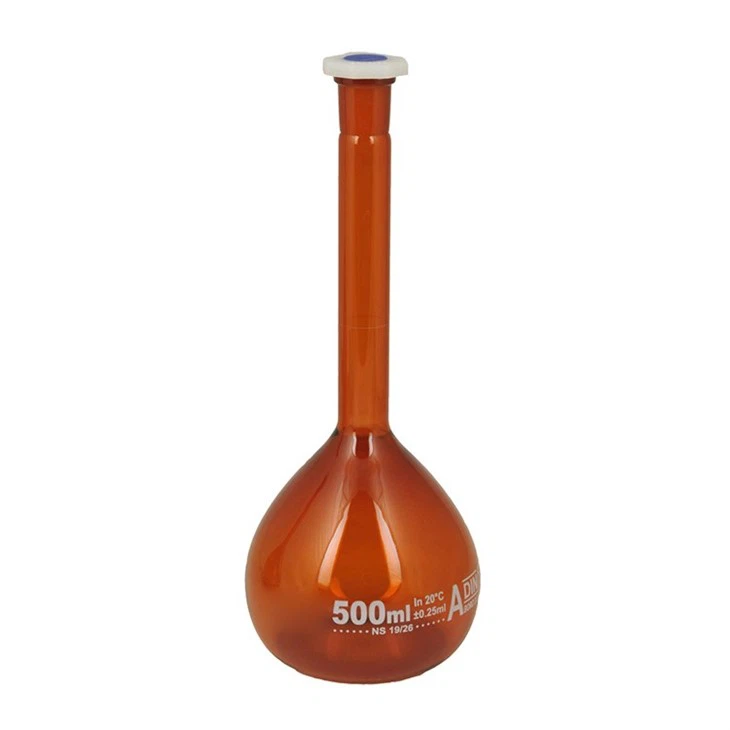
At our company, we offer a wide range of high - quality volumetric flasks. For example, we have the Lab 5ml 25ml 50ml Amber Glass Volumetric Flask with Stopper. These amber glass flasks are ideal for storing light - sensitive liquids. The stoppers ensure a tight seal, preventing evaporation and contamination.
We also provide Laboratory Large Graduated 1000ml 2000ml Glass Volumetric Flasks with Plastic Or Glass Stopper. These large - capacity flasks are suitable for large - scale experiments and industrial applications.
Contact Us for Purchase
If you are interested in purchasing our volumetric flasks or have any questions about their accuracy verification, please feel free to contact us. We are committed to providing you with the best products and services to meet your laboratory needs. Our team of experts can also offer guidance on the proper use and maintenance of volumetric flasks.
References
- ASTM E288 - 03(2017) Standard Specification for Glass Volumetric Flasks.
- ISO 1042:1998 Glass volumetric flasks.
In conclusion, verifying the accuracy of volumetric flasks is a crucial step in ensuring the quality of laboratory work. By using the methods described above and regularly checking the accuracy of these flasks, laboratories can minimize errors and obtain reliable results. Our high - quality volumetric flasks are designed to meet the strictest standards of accuracy and reliability, making them an ideal choice for your laboratory needs.