

Gravity bottles, also known as pycnometers, are essential tools in scientific research and various industrial applications. As a supplier of high - quality gravity bottles, I am excited to delve into the diverse scientific applications of these remarkable instruments.

Density Measurement
One of the most fundamental applications of a gravity bottle is the accurate measurement of density. Density is a crucial physical property that provides insights into the composition and quality of a substance. The principle behind density measurement using a gravity bottle is straightforward. First, the bottle is carefully weighed when it is empty. Then, it is filled with the sample whose density is to be determined, and the bottle with the sample is weighed again. The difference in mass between the filled and empty bottle gives the mass of the sample.
The volume of the gravity bottle is precisely calibrated. By dividing the mass of the sample by the volume of the bottle, we can calculate the density of the sample. This method is highly accurate and is used in a wide range of fields. For example, in the field of materials science, the density of metals, polymers, and ceramics can be measured to assess their purity and structural integrity. A deviation from the expected density value can indicate the presence of impurities or defects in the material.
Our Laboratory Glass 250ml 90mm Le Chatelier Chemical Specific Gravity Bottle is an excellent choice for density measurements in chemical laboratories. Its large volume allows for the measurement of relatively large samples, and the Le Chatelier design ensures accurate volume determination.
Specific Gravity Determination
Specific gravity is the ratio of the density of a substance to the density of a reference substance, usually water at a specified temperature. Gravity bottles are widely used for specific gravity determination. This measurement is important in many industries, such as the petroleum industry. In the petroleum industry, the specific gravity of crude oil and its products is used to classify and evaluate their quality. For instance, lighter crude oils with lower specific gravities are generally more valuable because they contain a higher proportion of light hydrocarbons, which are easier to refine into gasoline and other high - value products.
In the pharmaceutical industry, specific gravity is used to control the quality of liquid medications. A change in the specific gravity of a pharmaceutical formulation can indicate a change in its composition, which may affect its efficacy and safety. Our Lab Glass Gay Lussac 5ml 10ml 25ml 50ml Pycnometer Specific Gravity Bottle comes in various volumes, allowing for the specific gravity determination of different sample sizes, making it suitable for a wide range of applications.
Concentration Analysis
Gravity bottles can also be used for concentration analysis. In solutions, the density is often related to the concentration of the solute. By measuring the density of a solution using a gravity bottle, we can determine the concentration of the solute. This is particularly useful in chemical analysis and environmental monitoring.
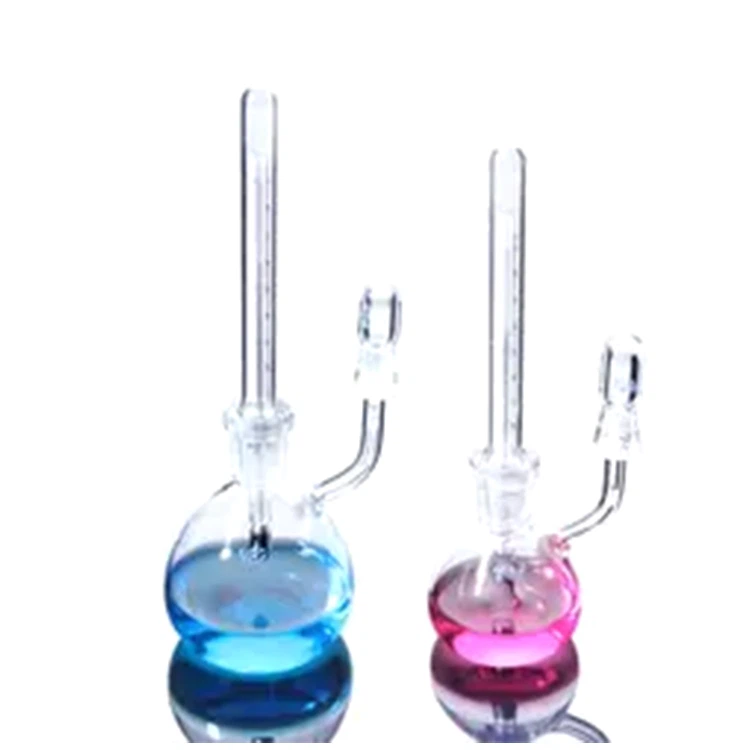
For example, in environmental science, the concentration of pollutants in water can be estimated by measuring the density of the water sample. In the food and beverage industry, the sugar concentration in fruit juices and soft drinks can be determined by measuring the density. Our High Borosilicate Glass Laboratory Pycnometer Specific Gravity Bottle with Thermometer is well - suited for concentration analysis. The high - borosilicate glass is resistant to chemical corrosion, and the built - in thermometer allows for temperature - corrected density measurements, which are essential for accurate concentration determination.
Phase Equilibrium Studies
In physical chemistry, gravity bottles play a role in phase equilibrium studies. Phase equilibrium refers to the state where two or more phases of a substance coexist in a stable manner. By measuring the density of different phases (such as liquid and solid phases) at different temperatures and pressures, scientists can study the phase transitions and the conditions under which they occur.
For example, in the study of alloys, the density changes during the solidification process can be monitored using a gravity bottle. This information helps in understanding the phase diagram of the alloy, which is crucial for designing and manufacturing high - performance alloys. The accurate volume and mass measurements provided by gravity bottles are essential for obtaining reliable data in phase equilibrium studies.
Quality Control in Manufacturing
Gravity bottles are widely used in manufacturing industries for quality control purposes. In the production of glass, ceramics, and plastics, the density of the final products is an important quality parameter. By regularly measuring the density using gravity bottles, manufacturers can ensure that the products meet the required specifications.
For example, in the glass manufacturing industry, the density of glass products can affect their optical properties and mechanical strength. By controlling the density, manufacturers can produce high - quality glass products with consistent performance. In the plastic industry, the density of plastic parts can indicate the degree of cross - linking and the presence of additives, which are important factors in determining the mechanical and chemical properties of the plastic.
Soil and Rock Analysis
In geotechnical engineering and geology, gravity bottles are used for soil and rock analysis. The density of soil and rock samples can provide information about their porosity, compaction, and mineral composition. By measuring the density of soil samples, engineers can assess the bearing capacity of the soil, which is crucial for the design of foundations for buildings and infrastructure.
In geology, the density of rock samples can help in identifying different rock types and understanding the geological history of an area. The accurate measurement of density using gravity bottles is essential for obtaining reliable data in these fields.
Research in Biological Sciences
In biological sciences, gravity bottles can be used in various research applications. For example, in the study of cell cultures, the density of the cell suspension can be measured to estimate the cell concentration. This is important for cell - based assays and bioprocessing.
In the field of marine biology, the density of seawater can be measured using gravity bottles. Changes in seawater density can affect ocean circulation and the distribution of marine organisms. By monitoring the density of seawater, scientists can better understand the complex interactions in the marine ecosystem.
Conclusion
The scientific applications of gravity bottles are vast and diverse, spanning multiple disciplines from chemistry and physics to geology and biology. As a supplier of gravity bottles, we are committed to providing high - quality products that meet the needs of researchers and industries. Our range of gravity bottles, including the Laboratory Glass 250ml 90mm Le Chatelier Chemical Specific Gravity Bottle, Lab Glass Gay Lussac 5ml 10ml 25ml 50ml Pycnometer Specific Gravity Bottle, and High Borosilicate Glass Laboratory Pycnometer Specific Gravity Bottle with Thermometer, are designed to provide accurate and reliable measurements.
If you are interested in purchasing gravity bottles for your scientific research or industrial applications, please feel free to contact us for more information and to discuss your specific requirements. We look forward to the opportunity to work with you and contribute to the success of your projects.
References
- ASTM International. (2019). Standard Test Methods for Density and Relative Density (Specific Gravity) of Liquids by Pycnometer. ASTM D1217 - 19.
- Vogel, A. I. (1978). Vogel's Textbook of Quantitative Chemical Analysis. Longman.
- Fetter, C. W. (2001). Applied Hydrogeology. Prentice Hall.