

Hey there! As a supplier of Petri dishes, I often get asked about the role these little guys play in water quality testing. So, let's dive right in and explore what makes Petri dishes so essential in this field.

What's a Petri Dish Anyway?
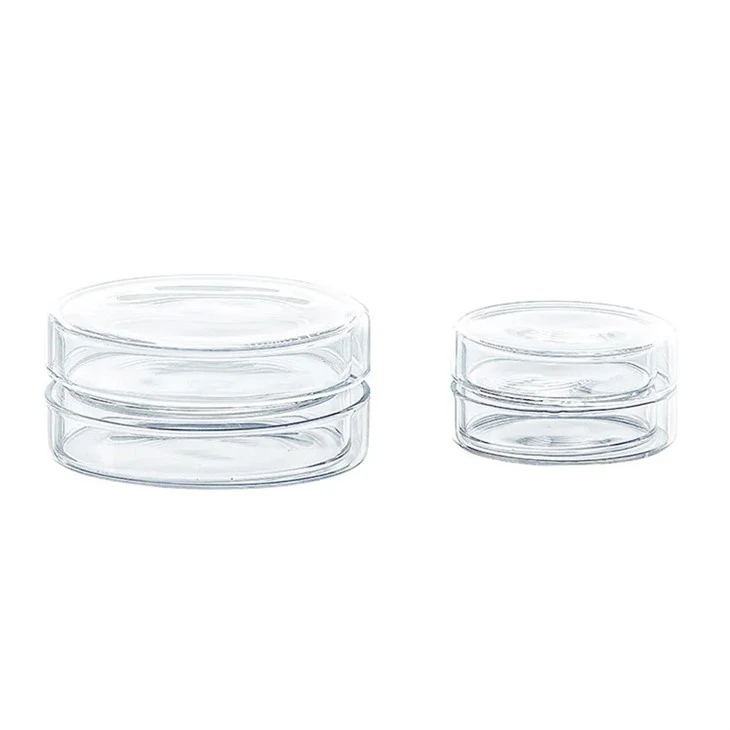
First things first, if you're not super familiar with Petri dishes, they're basically shallow, circular, flat-bottomed dishes with lids. They're typically made of glass or plastic. We offer Lab Glass Petri Dish 60mm 90mm 100mm Cell Culture Dish with Lids and Laboratory Glass 90mm 100mm 120mm Glass Petri Dish with Lids that are top - notch for all sorts of lab work, including water quality testing.
Why Water Quality Testing Matters
Before we get into the Petri dish's function, let's talk about why water quality testing is so important. Clean water is crucial for our health, whether it's for drinking, cooking, or using in industrial processes. Contaminated water can carry all sorts of harmful things like bacteria, viruses, and chemicals. By testing water quality, we can make sure that the water we use is safe.
The Petri Dish in Action
Culturing Microorganisms
One of the main functions of a Petri dish in water quality testing is to culture microorganisms. When you take a water sample, it might contain all kinds of tiny organisms that you can't see with the naked eye. These could be bacteria, fungi, or other microbes.
We put a special nutrient medium in the Petri dish. This medium is like a super - yummy meal for the microorganisms. It has all the nutrients they need to grow. Then, we add a small amount of the water sample to the dish and cover it with the lid. The lid is important because it keeps out other contaminants from the air.
Over time, if there are any microorganisms in the water sample, they'll start to multiply. They'll form little colonies on the surface of the nutrient medium. Each colony comes from a single microorganism that landed on the medium and started to grow. By counting these colonies, we can figure out how many microorganisms were in the original water sample.
For example, if we're testing for fecal coliform bacteria in water, which is an indicator of fecal contamination, we use a specific type of medium in the Petri dish. These bacteria will grow into distinct colonies on this medium, and we can then analyze how much contamination there is in the water.
Isolating Specific Microorganisms
Another cool thing about Petri dishes is that they allow us to isolate specific microorganisms. Sometimes, we want to study a particular type of bacteria or fungus in the water sample. We can use different techniques on the Petri dish to separate out the different types of microorganisms.
For instance, we might use a streak plate method. We take a small amount of the water sample and use a sterile loop to spread it in a specific pattern on the surface of the nutrient medium in the Petri dish. As we do this, the microorganisms get spread out more and more. Eventually, we can get single colonies of individual microorganisms. This is really useful because it lets us study just one type of microorganism at a time. We can then test it to see if it's harmful or what its characteristics are.
Identifying Contaminants
Petri dishes also help us identify contaminants in the water. Different microorganisms grow in different ways on the nutrient medium. Some might form colonies that are a certain color, shape, or size. By looking at these characteristics, we can start to figure out what kind of microorganism we're dealing with.
We can also use additional tests on the colonies that grow in the Petri dish. For example, we might use biochemical tests to see how the microorganisms react to different chemicals. These tests can give us more information about the identity of the contaminants in the water.
The Benefits of Using Our Petri Dishes
Quality Materials
Our Petri dishes are made from high - quality materials. The glass ones are made from a special type of glass that is resistant to thermal shock and chemical corrosion. This means they can withstand the different conditions in the lab, like being heated or having different chemicals added to them. The plastic ones are also very durable and have a smooth surface, which is great for the growth of microorganisms.
Standard Sizes
We offer a range of standard sizes, like 60mm, 90mm, 100mm, and 120mm. These standard sizes are really useful because they fit well in most lab equipment. For example, they can easily be placed in incubators, which are used to control the temperature and humidity for the growth of microorganisms.
Proper Lids
The lids on our Petri dishes are designed to fit snugly. This helps to prevent contamination from the outside air. They also have a good seal, which keeps the moisture inside the dish, creating a nice environment for the microorganisms to grow.
Conclusion
In a nutshell, Petri dishes are super important in water quality testing. They help us culture, isolate, and identify microorganisms in water samples. Whether you're a researcher in a big lab or someone working in a small water treatment plant, having good - quality Petri dishes is essential for accurate water quality testing.
If you're in the market for Petri dishes for your water quality testing needs, we'd love to talk to you. We can offer you high - quality products at competitive prices. Get in touch with us to start a conversation about your requirements, and let's work together to ensure clean and safe water for everyone.
References
- Madigan, M. T., Martinko, J. M., Bender, K. S., Buckley, D. H., & Stahl, D. A. (2015). Brock Biology of Microorganisms. Pearson.
- APHA, AWWA, WEF. (2017). Standard Methods for the Examination of Water and Wastewater. American Public Health Association.