

Measuring small volumes accurately is a common challenge in many laboratory settings. While volumetric flasks are typically associated with measuring larger volumes, they can also be effectively used to measure small volumes with the right techniques. As a leading volumetric flask supplier, we understand the importance of precision in laboratory work and are here to share some valuable insights on how to measure small volumes using a large volumetric flask.
Understanding the Basics of Volumetric Flasks
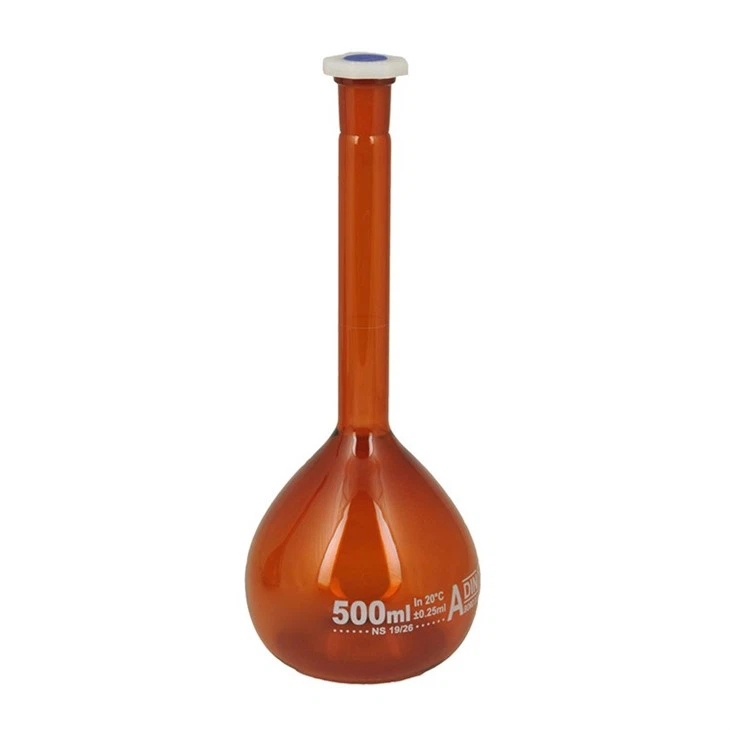
Before delving into the techniques for measuring small volumes, it's essential to understand the basic principles of volumetric flasks. Volumetric flasks are designed to contain a specific volume of liquid at a particular temperature, usually 20°C. They are calibrated to a high degree of accuracy and are marked with a single graduation line indicating the exact volume they can hold.
There are two main types of volumetric flasks available in the market: large graduated flasks and small amber glass flasks. Our Laboratory Large Graduated 1000ml 2000ml Glass Volumetric Flasks with Plastic Or Glass Stopper are ideal for measuring larger volumes, while our Lab 5ml 25ml 50ml Amber Glass Volumetric Flask with Stopper are suitable for smaller volumes. These flasks are made from high-quality glass, ensuring excellent chemical resistance and durability.
Techniques for Measuring Small Volumes with a Large Volumetric Flask
Dilution Method
One of the most common techniques for measuring small volumes with a large volumetric flask is the dilution method. This method involves diluting the sample with a known volume of solvent to a larger volume and then calculating the original volume based on the dilution factor.

Here's a step-by-step guide on how to use the dilution method:
- Select the appropriate volumetric flask: Choose a large volumetric flask that can accommodate the diluted sample. Make sure the flask is clean and dry before use.
- Add the sample: Using a pipette or a burette, carefully transfer the small volume of the sample into the volumetric flask.
- Add the solvent: Add a known volume of solvent to the flask, filling it up to the graduation line. Make sure to mix the solution thoroughly by inverting the flask several times.
- Calculate the dilution factor: The dilution factor is the ratio of the final volume to the initial volume. For example, if you add 1 ml of sample to a 100 ml volumetric flask and fill it up to the mark with solvent, the dilution factor is 100.
- Determine the original volume: To calculate the original volume of the sample, divide the measured volume of the diluted solution by the dilution factor.
Gravimetric Method
Another technique for measuring small volumes with a large volumetric flask is the gravimetric method. This method involves weighing the empty flask, adding the sample, and then weighing the flask again to determine the mass of the sample. The volume of the sample can then be calculated based on its density.
Here's a step-by-step guide on how to use the gravimetric method:
- Weigh the empty flask: Using a balance, weigh the empty volumetric flask and record its mass.
- Add the sample: Using a pipette or a burette, carefully transfer the small volume of the sample into the volumetric flask.
- Weigh the flask with the sample: Weigh the flask again with the sample and record its mass.
- Calculate the mass of the sample: Subtract the mass of the empty flask from the mass of the flask with the sample to determine the mass of the sample.
- Determine the volume of the sample: Using the density of the sample, calculate the volume of the sample by dividing the mass of the sample by its density.
Calibration Method
The calibration method involves calibrating the large volumetric flask for measuring small volumes. This method requires the use of a reference standard with a known volume.
Here's a step-by-step guide on how to use the calibration method:
- Select a reference standard: Choose a reference standard with a known volume that is close to the volume you want to measure.
- Add the reference standard: Using a pipette or a burette, carefully transfer the reference standard into the volumetric flask.
- Mark the meniscus: Fill the volumetric flask with solvent up to the graduation line and mark the position of the meniscus.
- Repeat the process: Repeat the process with different volumes of the reference standard to create a calibration curve.
- Measure the sample: Using the calibration curve, measure the volume of the sample by comparing the position of its meniscus with the calibration curve.
Tips for Accurate Measurement
- Use clean and dry equipment: Make sure all the equipment you use, including the volumetric flask, pipettes, and burettes, are clean and dry before use. Any residue or moisture can affect the accuracy of your measurements.
- Handle the sample carefully: When transferring the sample, make sure to handle it carefully to avoid spills or losses. Use a pipette or a burette with a fine tip for accurate dispensing.
- Mix the solution thoroughly: After adding the sample and the solvent, make sure to mix the solution thoroughly by inverting the flask several times. This ensures that the sample is evenly distributed throughout the solution.
- Read the meniscus correctly: When reading the volume of the solution, make sure to read the meniscus at eye level. The meniscus is the curved surface of the liquid in the flask, and the volume should be read at the bottom of the meniscus.
- Control the temperature: Volumetric flasks are calibrated at a specific temperature, usually 20°C. Make sure to measure the volume of the solution at the same temperature to ensure accurate results.
Conclusion
Measuring small volumes with a large volumetric flask is a challenging task, but it can be achieved with the right techniques and equipment. As a volumetric flask supplier, we offer a wide range of high-quality volumetric flasks that are suitable for measuring both large and small volumes. Whether you choose the dilution method, the gravimetric method, or the calibration method, following the tips for accurate measurement will help you obtain precise and reliable results.
If you have any questions or need further assistance with measuring small volumes or selecting the right volumetric flask for your needs, please feel free to contact us. We are here to provide you with the best solutions for your laboratory requirements.
References
- Harris, D. C. (2015). Quantitative Chemical Analysis (9th ed.). W. H. Freeman and Company.
- Skoog, D. A., West, D. M., Holler, F. J., & Crouch, S. R. (2014). Fundamentals of Analytical Chemistry (9th ed.). Brooks/Cole.