

The influence of light on Petri dish cultures is a topic of great significance in the fields of microbiology, cell biology, and other related scientific disciplines. As a leading supplier of Petri dishes, we understand the importance of this aspect in laboratory research. In this blog, we will explore the various effects of light on Petri dish cultures and how it can impact experimental outcomes.
The Basics of Petri Dish Cultures
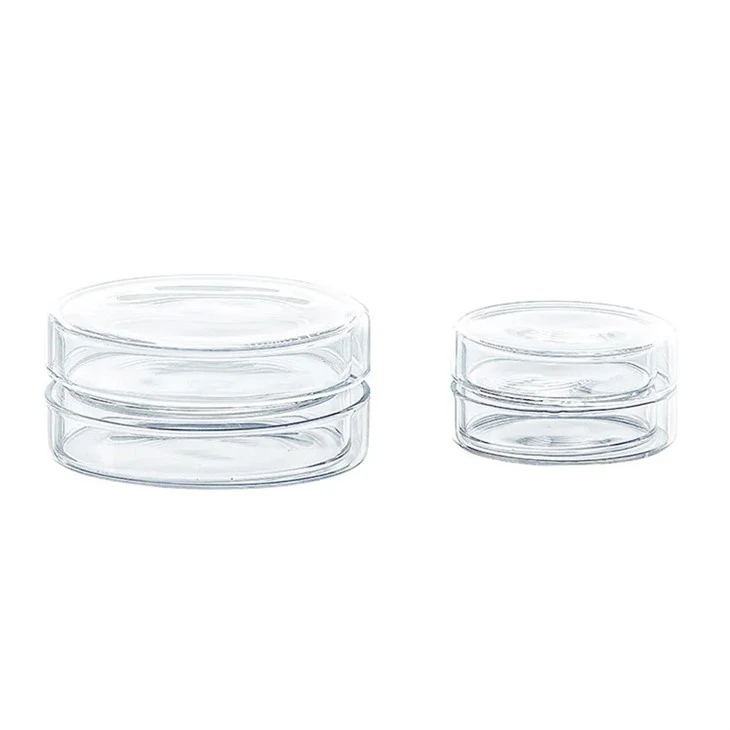
Before delving into the effects of light, it is essential to understand the basic concept of Petri dish cultures. A Petri dish is a shallow, circular, lidded dish that is used to culture cells, microorganisms, or tissues. It provides a controlled environment for the growth and observation of these biological specimens. Petri dishes come in various sizes and materials, including glass and plastic. For high - quality glass Petri dishes, you can check out our Laboratory Glass 90mm 100mm 120mm Glass Petri Dish with Lids and Lab Glass Petri Dish 60mm 90mm 100mm Cell Culture Dish with Lids.
Types of Light and Their Effects
Visible Light
Visible light, which ranges from approximately 400 - 700 nanometers, can have both direct and indirect effects on Petri dish cultures.
Direct Effects
Some photosensitive organisms, such as certain algae and cyanobacteria, can use visible light for photosynthesis. When these organisms are cultured in Petri dishes, the presence of appropriate visible light is crucial for their growth and survival. For example, green algae require light in the blue and red spectra for efficient photosynthesis. If the Petri dish is placed in an area with insufficient visible light, the growth of these photosynthetic organisms will be stunted.

On the other hand, excessive visible light can also be harmful. High - intensity light can generate heat, which may increase the temperature inside the Petri dish. This rise in temperature can disrupt the metabolic processes of the cultured organisms. For instance, bacteria that are sensitive to temperature changes may stop growing or even die if the temperature exceeds their optimal range.
Indirect Effects
Visible light can also cause photochemical reactions in the culture medium. Some components of the medium, such as vitamins and certain amino acids, can be degraded by light. This degradation can alter the nutrient composition of the medium, affecting the growth and viability of the cultured cells or microorganisms. For example, riboflavin, a vitamin commonly found in culture media, is sensitive to light. When exposed to visible light, riboflavin can undergo photolysis, leading to the production of reactive oxygen species (ROS). These ROS can damage the DNA, proteins, and membranes of the cultured organisms, ultimately inhibiting their growth.
Ultraviolet (UV) Light
UV light, with wavelengths shorter than 400 nanometers, is known for its germicidal properties. However, it can also have significant effects on Petri dish cultures.
Positive Effects
In some cases, low - dose UV light can be used to sterilize the surface of the Petri dish before inoculation. This helps to reduce the risk of contamination from unwanted microorganisms. Additionally, certain types of cells, such as some cancer cells, can be sensitized to chemotherapy drugs after exposure to low - dose UV light. This phenomenon is being explored in cancer research to improve the effectiveness of treatment.
Negative Effects
High - dose UV light is extremely harmful to most living organisms. It can cause DNA damage, including the formation of thymine dimers. These dimers can disrupt DNA replication and transcription, leading to mutations and cell death. When Petri dish cultures are exposed to high - intensity UV light, the cultured cells or microorganisms are likely to be killed or severely damaged. Even short - term exposure to UV light can have long - term consequences for the culture, as the damaged cells may pass on their mutations to subsequent generations.
Infrared (IR) Light
Infrared light, with wavelengths longer than 700 nanometers, is mainly associated with heat.
Effects on Temperature
IR light can increase the temperature of the Petri dish and its contents. Similar to the effects of high - intensity visible light, an increase in temperature due to IR light can disrupt the normal physiological processes of the cultured organisms. Some thermophilic organisms may tolerate higher temperatures, but most mesophilic organisms, which grow best at moderate temperatures, will be negatively affected. For example, mammalian cells cultured in a Petri dish are typically maintained at around 37°C. Exposure to excessive IR light can raise the temperature above this optimal range, leading to cell stress and death.
Controlling Light in Petri Dish Cultures
To ensure the success of Petri dish cultures, it is essential to control the light conditions.
Light Intensity
The intensity of light can be adjusted by using light filters or by changing the distance between the light source and the Petri dish. For example, if you are culturing photosynthetic organisms, you can use a light meter to measure the light intensity and adjust it to the optimal level for their growth. In a laboratory setting, it is also common to use incubators with adjustable light settings to provide a stable and controlled light environment.
Light Wavelength
Different organisms have different light requirements in terms of wavelength. For photosynthetic organisms, specific light wavelengths can be provided using colored filters or specialized light sources. For example, LED lights can be programmed to emit light at specific wavelengths, allowing researchers to customize the light conditions for their cultures.
Light Duration
The duration of light exposure is also an important factor. Some organisms, such as plants, have a circadian rhythm that is influenced by the light - dark cycle. In a Petri dish culture, mimicking the natural light - dark cycle can promote normal growth and development. For example, a 12 - hour light and 12 - hour dark cycle may be suitable for many plant cell cultures.
Conclusion
The effect of light on Petri dish cultures is complex and multifaceted. Light can have both positive and negative impacts on the growth, survival, and viability of the cultured cells and microorganisms. As a Petri dish supplier, we are committed to providing high - quality products that can help researchers create optimal culture conditions. By understanding the effects of different types of light and how to control them, researchers can improve the reproducibility and reliability of their experiments.
If you are interested in purchasing our Petri dishes for your laboratory research, we invite you to contact us for procurement and further discussion. We are dedicated to meeting your specific needs and providing excellent customer service.
References
- Atlas, R. M. (2010). Principles of Microbiology. McGraw - Hill.
- Lodish, H., Berk, A., Kaiser, C. A., Krieger, M., Scott, M. P., Bretscher, A.,... & Darnell, J. (2016). Molecular Cell Biology. W. H. Freeman.
- Prescott, L. M., Harley, J. P., & Klein, D. A. (2012). Microbiology. McGraw - Hill.